Notes from SpectrumCon 2020 sessions by Gangnam Unni and Pixo on asking why, chapter and squad structures, design review, research, data challenges, minimum lovable products, global localization, user reviews, and collaborative product craft.
These notes cover the Gangnam Unni and Pixo sessions broadcast at SpectrumCon on November 28, 2020.
Gangnam Unni
How Gangnam Unni works: squads and chapters
- We tried deciding that we would ask “why.”
→ Nobody asked why.
Failed attempt 1: OKRs
- Let us try OKRs for individual growth.
- Personal OKR
→ Objective: build a good habit / Key result: make the bed every day
Everyone only asked whether the bed had been made, and the objective disappeared.
Failed attempt 2: daily scrum
- Team members briefly share what they did yesterday and will do today.
- We tried it. It failed.
- It asks what, not why.
Retrospective
- Why it failed: we did not ask why.
- Then which why should we ask?
Successful attempt 1: design reviews
Why do we need design reviews?
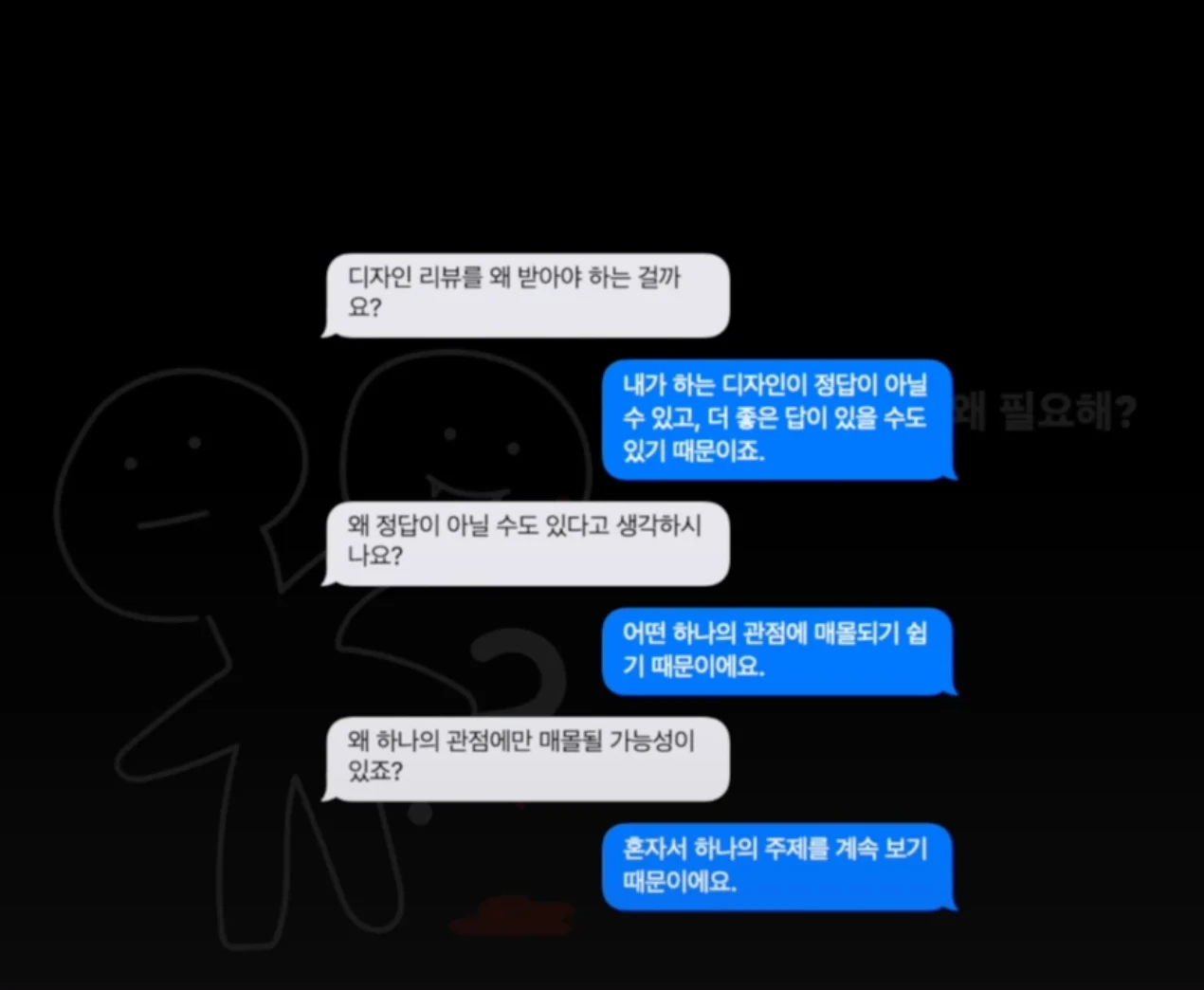
Insights from designers in the same professional discipline offer a different value from a squad. Feedback from someone with the same expertise matters.
→ It failed again. Why? → Feedback came once a week. → There was no time to apply it, and reviewers struggled to understand the squad's specific context. A meaningful design review must share the context too.
What did you do to ask why?
- Use workshops.
- Hold workshops to spread the idea to other roles.
- Ask why a particular chapter is necessary in the company.
What is the 30-day data challenge?
- It began with the question: how do we design while understanding data well?
- Fill a Notion calendar with questions.
- Are there differences by operating system?
- How different are entry rates by tab?
- Assign designers' names to each question.
- Open Amplitude and ask that designer.
How did mutual growth begin?
- Make and display a poster. Create an intersection among how, why, and what, then invite people to attach sticky notes.
Intuition
- Try to avoid decisions based only on intuition.
- Encourage proposals that begin with intuition.
People may answer why differently. How do you ask an appropriate why?
- Practice the Five Whys by following every answer with another why, five times.
What happens when chapter goals and squad goals conflict? How do you allocate resources?
- Chapters and squads aim to complement each other.
- Squad goal: run small experiments.
- Chapter goal: establish a larger goal during those experiments.
- When they conflict, make the chapter goal longer term.
Example: a design system
- While assigned to a squad, a designer cannot work on the design system every day. Treat it as a long-term effort.
Quantitative data may not explain user psychology or causes of behavior. What supports it?
- Usability tests, interviews, and collecting the voice of the customer.
- Use usability testing in particular to understand causes and behavioral tendencies.
- Interview the participants afterward.
- Reference: Don't Make Me Think.
Why did the bottom-navigation improvement in the keynote have a low conversion rate?
- Hypothesis: if people do not see what they want, do they leave instead of searching further?
I understand Duotone created Gangnam Unni's branding. How did you collaborate, and did data inform the brand?
- Perhaps we could not establish a direction because it was unclear why the service existed.
- They kept coming to the office and ran workshops with us.
- We formed an insight group to invite participation from other roles.
- We learned frameworks such as the Golden Circle and still use them actively.
Pixo
Sharing information about technical limits and new technology between designers and developers
The shared world expands.
Minimize process
When one designer and one developer work together, design feedback can go directly into code.
Refine the details.
Focus on the core experience. Discuss a single feature for months if necessary to refine it.
Even for a first release, offering a polished experience was a survival strategy in a fiercely competitive market.
Gather positive reviews
App Store reviews directly affect ranking. People use ranking to decide whether to download an app, so gathering strong reviews matters.
→ How can we invite a review without annoying the user?
Would people be more likely to leave one at the moment they are happiest?
- Are you satisfied with Baby Story? → if yes → Would you give feedback? → if yes → open the App Store rating.
- After the update, the average rating reached 4.8 and review volume surged.
Conclusion: asking at peak satisfaction was effective.
Is localization essential for entering a global market?
If global reach is the final goal, targeting English-speaking markets from the start can be effective because the market and user pool are larger than Korea's.
Because the team is not native to every language, it avoids UX that requires long explanations. Wherever possible, the experience communicates without language through icons, gestures, and other signals.
How did you build the team?
- Many competitors had teams and could respond to issues relatively quickly. As Pixo's product count grew, building everything with two people became difficult.
→ The company formed a team for more advanced and systematic work.
- As headcount grew, it became difficult to establish shared processes around MVPs, priority, efficiency, and values.
Align through design reviews, onboarding, and weekly meetings
- When the result was ready for release, it looked far too incomplete. Everyone strongly doubted that users would be happy with the update. The team canceled the schedule, planned development again, refined the details, and then launched.
- Our goal should not be an MVP but an MLP, a minimum lovable product. Will people care about using it?
- Almost every kind of app already exists. Refining details can create a differentiated overall experience, one strategy for improving the core user experience.
The team has grown recently. What became difficult?
- In a horizontal structure, everyone had different values and design directions. How could that be resolved?
- The collaboration process introduced a Craft Point score.
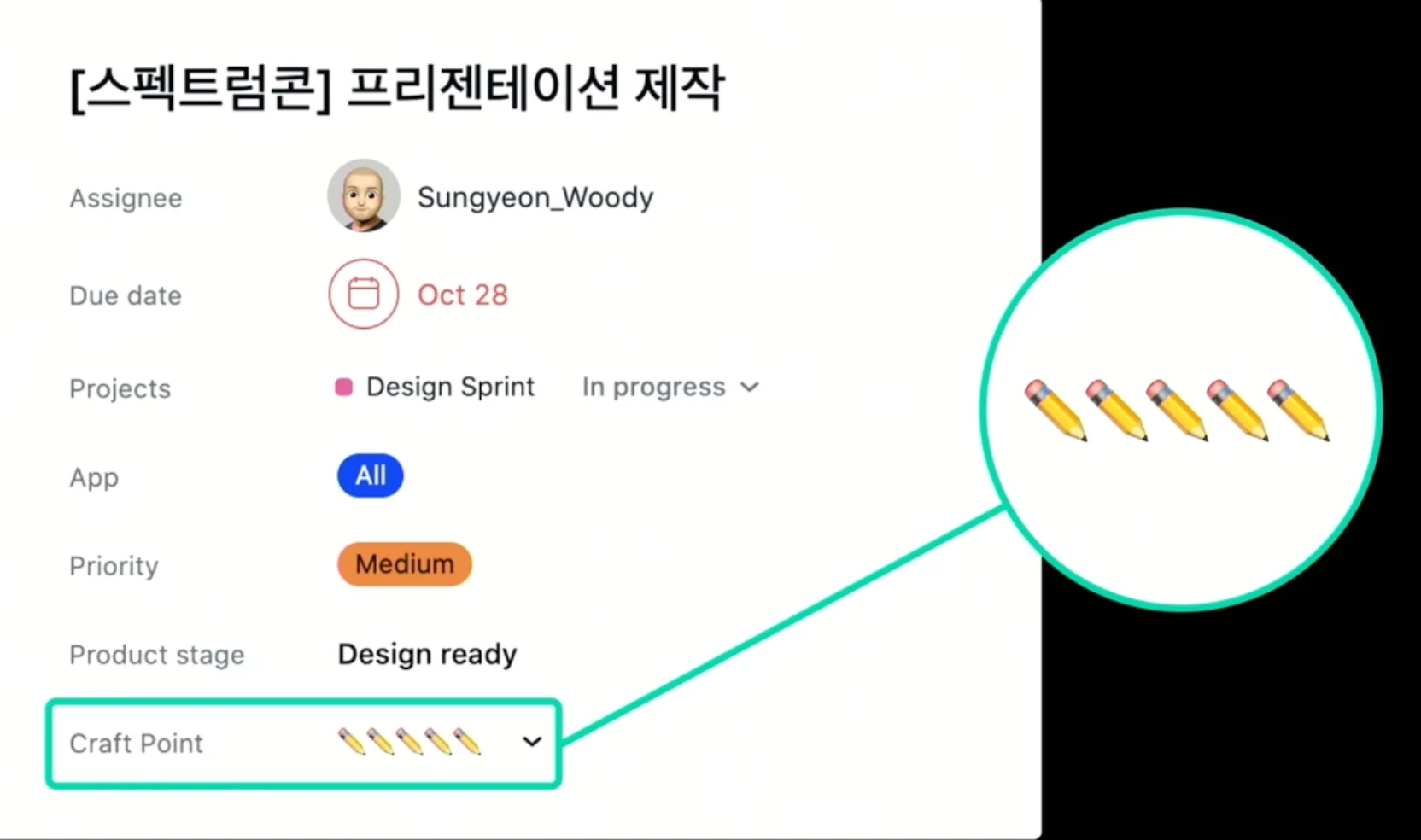
- A five-point item receives deep thought; a one-point item is completed quickly.
- Missing information created inefficiency. → Introduce loosely organized squads.
What matters most when Pixo builds different products, and how does the team collaborate with developers?
- The team has twelve members.
- Does this interrupt the user? Ideas go into a backlog, then the team checks again whether a feature or UI exists because of its own ambition rather than user need.
- Example: send a daily notification about a child's growth → Reviews showed that most users…
How do you manage feedback from international customers?
- Manage it in Notion and Asana. Prioritize bug fixes and features that can be applied quickly while having a large impact on the experience.
Responding to users around the world must create difficulties. What happened?
- One negative review mistook a Buddhist symbol for a Nazi symbol. The team learned to consider cultural context and check whether a design might cause discomfort.
- The team removed a feature it believed few people used and received a wave of criticism. It turned out that core users relied on it heavily. The lesson was that silence in customer feedback does not prove a feature is unnecessary.
How do you approach localization when launching an app?
- Do not account for every locale from the first release. Launch, observe the response, and then consider localization.
- Focus first on the US market. Translation into many languages can change the visible interface substantially, so consider it together with a designer.
- Digital-product teams have rarely used the word lovable. MLP arose from questioning whether startups had become overly absorbed in MVPs for survival.
Is it a validated model? It can only be used once a reasonably clear user model exists.
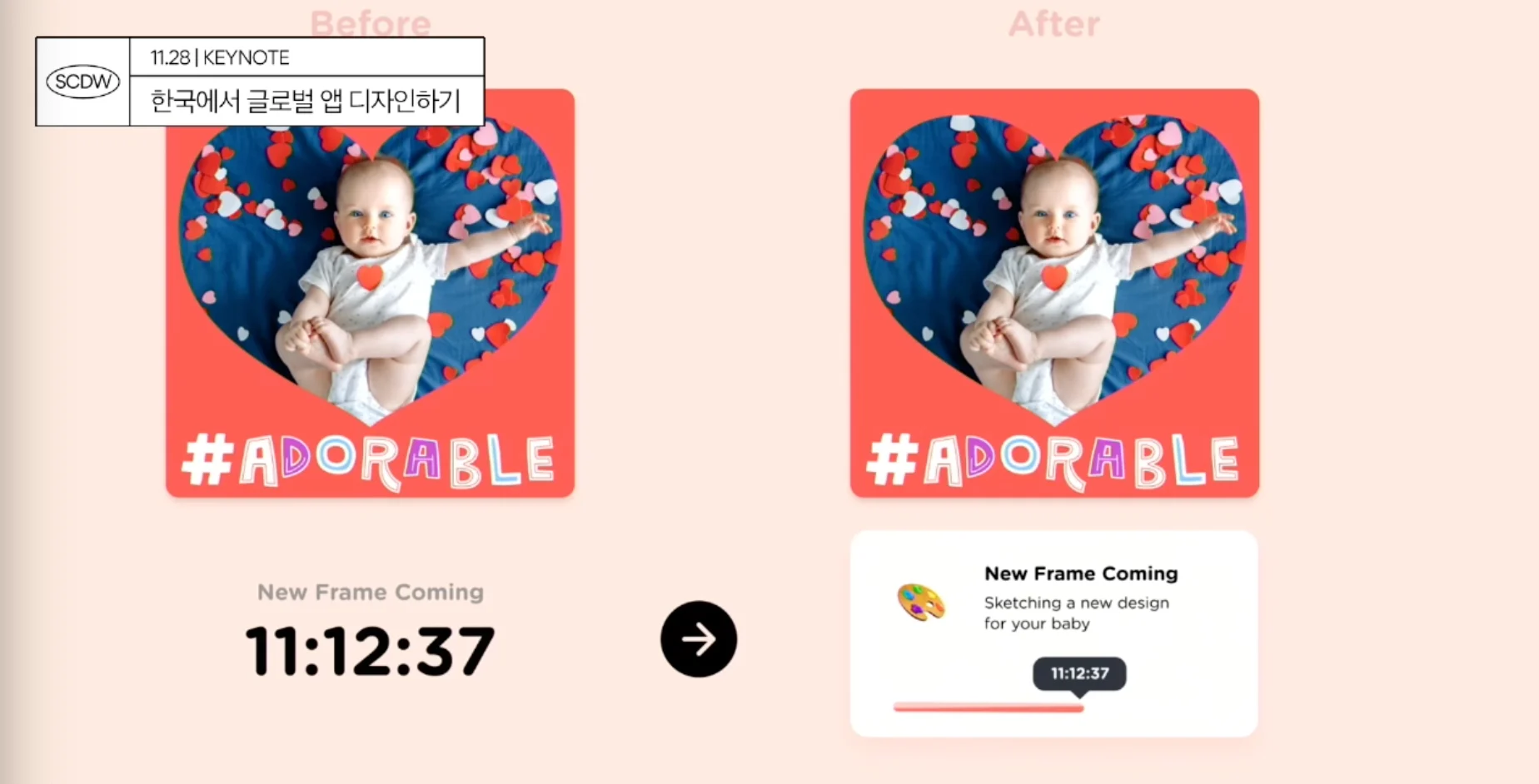
- The “New Frame Coming” screen on the left created no anticipation. The team spent more time and redesigned it as shown on the right.
Why does Pixo pursue a Minimum Lovable Product?
- App stores are already overflowing. A barely functioning app built only to test a hypothesis is not competitive. Usability matters, but the team also wants to create qualitative fullness and satisfaction.
Which challenges will Pixo take on next?
- Think deeply about interaction guidelines and prototyping. Study engineering documentation and improve internal practices to communicate better with developers and widen mutual understanding.
- Build data-informed thinking. To establish the habit, use Amplitude to raise a weekly agenda, discuss it, and improve.
Live Q&A
- Was Baby Story planned in Korea? How did you know the practice existed among parents abroad and that the market had value?
→ The founders planned it together.
- Every app increases customer-support work, all in English. How do you respond?
→ The founders handled it directly at first. Today, the internal team handles App Store and critical emails, while overseas support staff answer the rest.
→ We believe user reviews contain the answers, though they require wise judgment. Aggressive support messages always hurt, but perhaps slightly less in English.
- Where do you begin researching English-speaking cultures for localization?
→ Set your phone to English and observe extensively. Define problems that could exist around us regardless of language, then focus on proposing solutions to universal problems.
- How do you select an idea for a new app? Have you abandoned ideas after market tests and pivots?
→ We try to solve universal problems. One discontinued example is Cover, our first app, which was featured around the world. We removed Cover to reach more users with Baby Story. Even a once-featured app will fail if it stops responding to user needs.
- Why do you think you succeeded globally?
→ The App Store contains 1.9 million apps, but not all are successful. Do not focus only on your own needs. Assume there is much you do not know, and remain open to the responses that arrive.
ⓒ 2021. SangHyo Yee, All Rights Reserved.