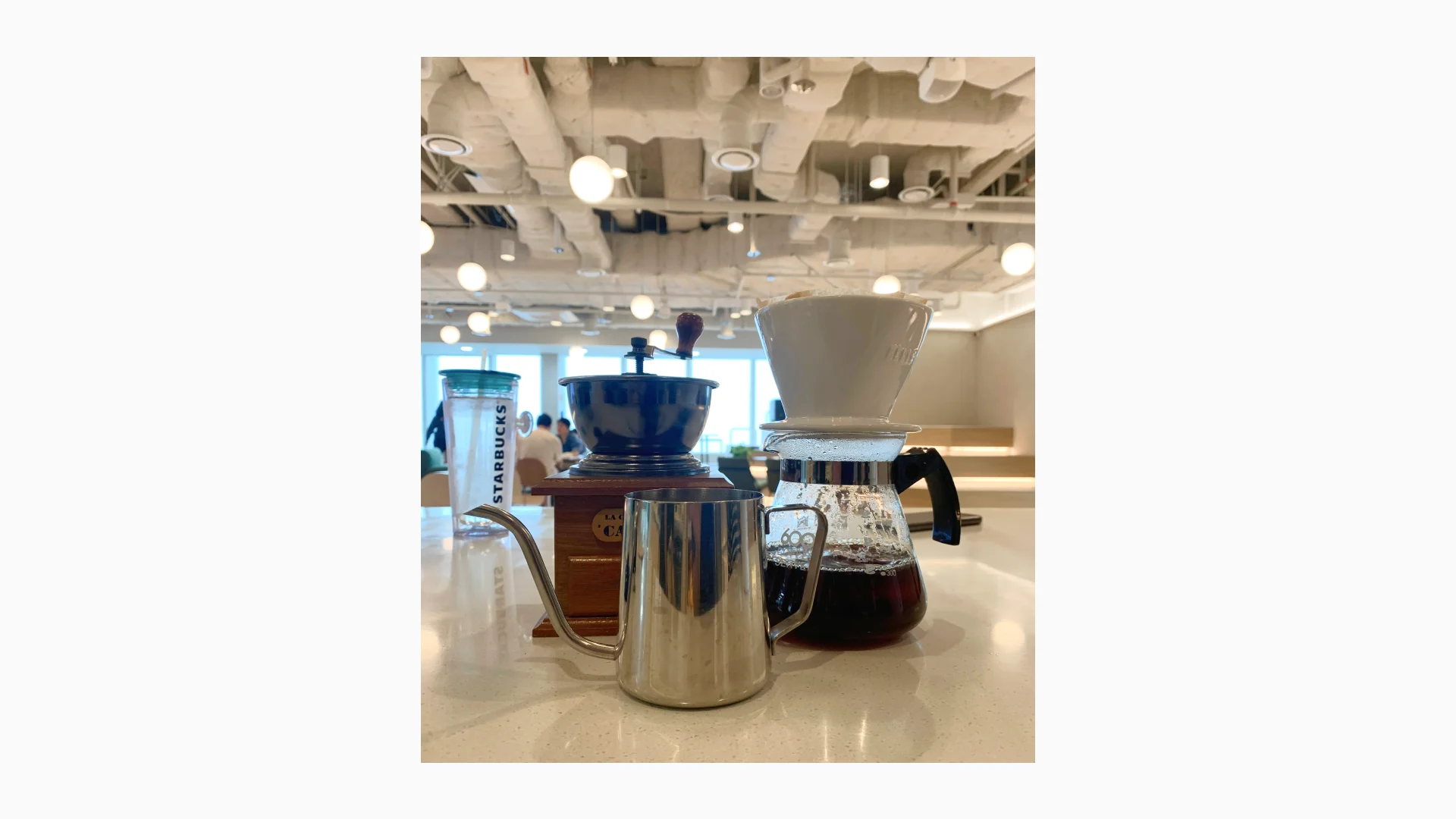
I like working with other people. The clearest expression of that may be the time I spent making coffee at work.
Over two years, I made roughly 3,000 cups for my colleagues. It was never a formal program. While I ground beans and poured water, conversations started on their own. A stuck problem, a new idea, or simply how someone was doing would come up. Coffee did not solve everything, of course, but it gave us more chances to meet as people rather than roles on an org chart.
That is where I learned that collaboration also grows in the small encounters outside a meeting room. I kept the calculation and the full story in an essay about making 3,000 cups of coffee at work, currently available in Korean.
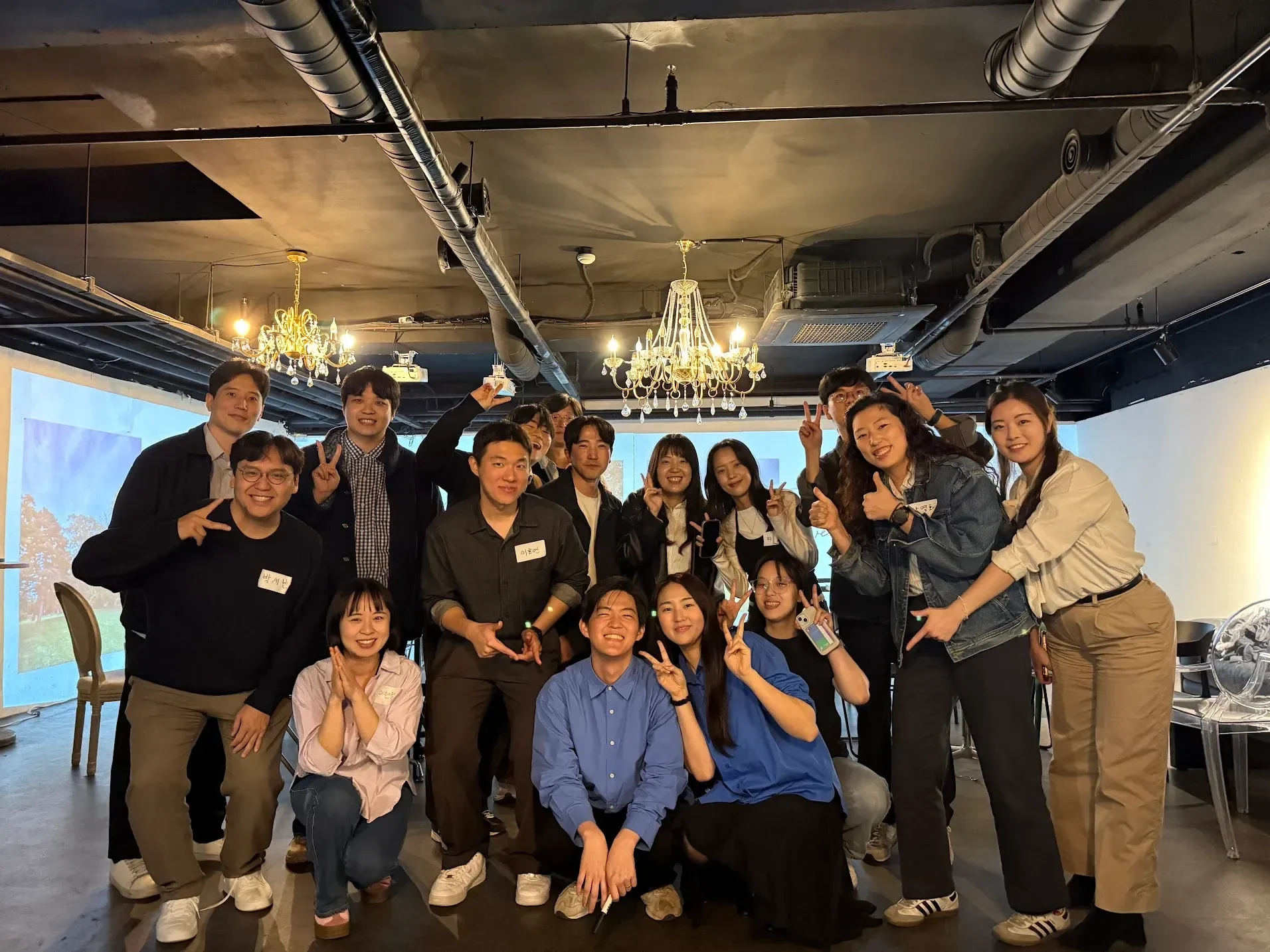
For me, design does not stop at the edge of a screen. When my partner and I planned our wedding, the first question was not just what kind of event we wanted to host. It was what kind of time our friends would have, from the moment they were invited until they went home.
The invitation became the opening scene that explained the gathering. Seating, the program, directions, and the way we recorded the day all became ways to help friends from different parts of our lives feel comfortable meeting one another. Seeing the sequence through the eyes of a guest arriving for the first time mattered more than seeing it from the center, where we stood.
A personal event becomes a service when you look at it as someone else's journey. Designing Our Wedding as a Service shows how naturally experience design follows me into everyday life.
Perhaps that is why my career has repeatedly brought me to the experience of people at work. At Wanted, I designed HR Tech products for working people. At the same time, I helped grow a design system so that designers and developers around me could build products with more speed and consistency.
I care about my colleagues' experience as much as the end user's. The work is not only to define a rule. It is to help people understand the rule, use it with confidence, and change it together when reality asks for something better. I think of that role as being a designer for designers.
In practice, this was less about organizing components and more about creating a shared language for the team. Building Design System Culture is the story of trying to change how people worked together, not merely the system they worked with.
When I find something exciting, I want to make a version of it myself. I co-founded DICO, a learning product for Spanish-speaking K-pop fans, and learned what it takes to connect a small idea to a real product, content, and community.
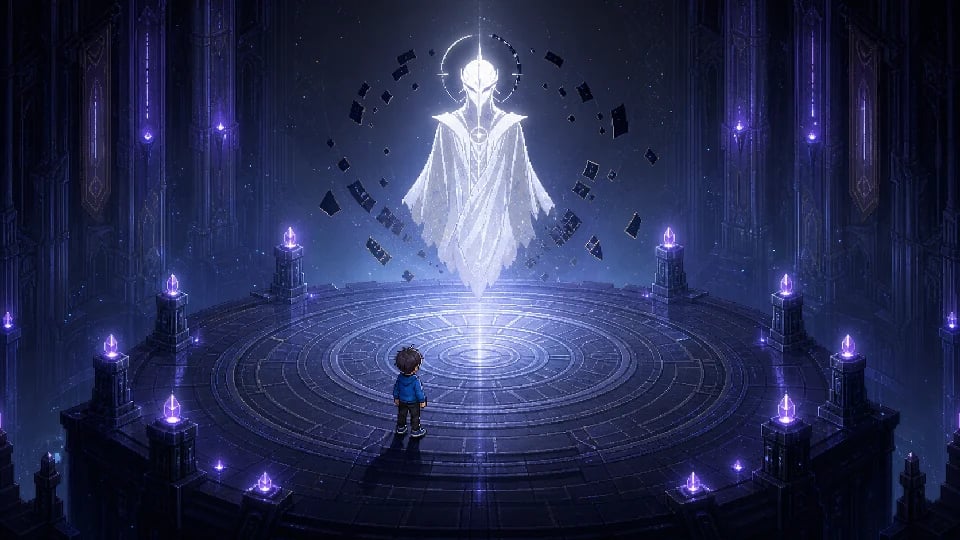
I still make side projects for the same reason. I designed both the rules and the creation tools for The Gate, and treated AI images as a small product shaped by taste and observation in AI Side Projects.
Making something myself turns every decision into my responsibility. I have to decide what belongs, what can go, and how finished an idea needs to be before it can reach another person. That practice also makes me a more grounded designer when I return to product work with a larger team.
The roots of this outlook go back to New Zealand when I was twenty. I had grown up and studied in Korea, then spent a year living there with my family. Friends from many countries became part of my everyday life.
I loved discovering that something taken for granted in one place could feel completely unfamiliar in another. When I returned to Korea, that curiosity grew into a deeper interest in English-speaking cultures and a global career. I chose English literature as a second major at university.
The path from building DICO for Spanish-speaking users to making creative tools with colleagues from around the world at LottieFiles began with that curiosity. Finding common ground among people with different contexts is still one of my favorite design problems.
I believe learning stays with me longer when I share it. That is why I have kept contributing to design communities for nine years.
While organizing Friends of Figma Seoul, I helped grow a community of more than 6,000 members and produced over 20 gatherings in Korea and abroad. I have spoken on stages including INFCON and taught courses and workshops for working designers. When someone begins their next question with something I organized or explained, the work comes back as another lesson for me.
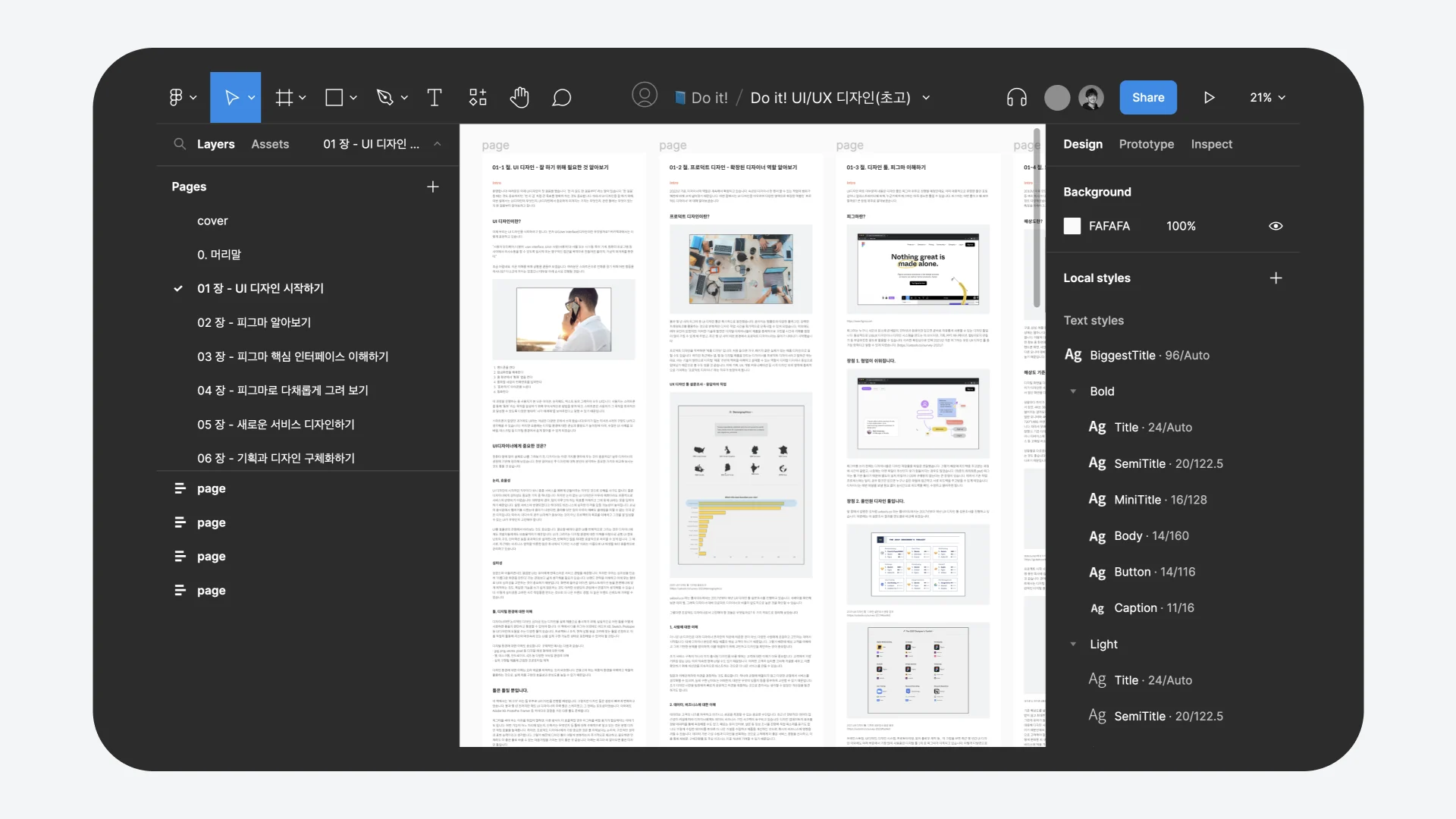
I also gathered scattered knowledge into the order that product design work actually happens and wrote 『Do it! 실무 순서로 배우는 프로덕트 디자인』. Writing a Product Design Book is another chapter of the same habit: learn, organize, and share again.
Looking back, making coffee, designing products and systems, and shaping a wedding or a community do not feel like separate pursuits. Each is a way to improve how people meet, understand one another, and move through a particular context.
I want to keep making experiences for people and sharing what I learn along the way. I am always glad to talk about product design, creative technology, community, or something useful that does not have a name yet.