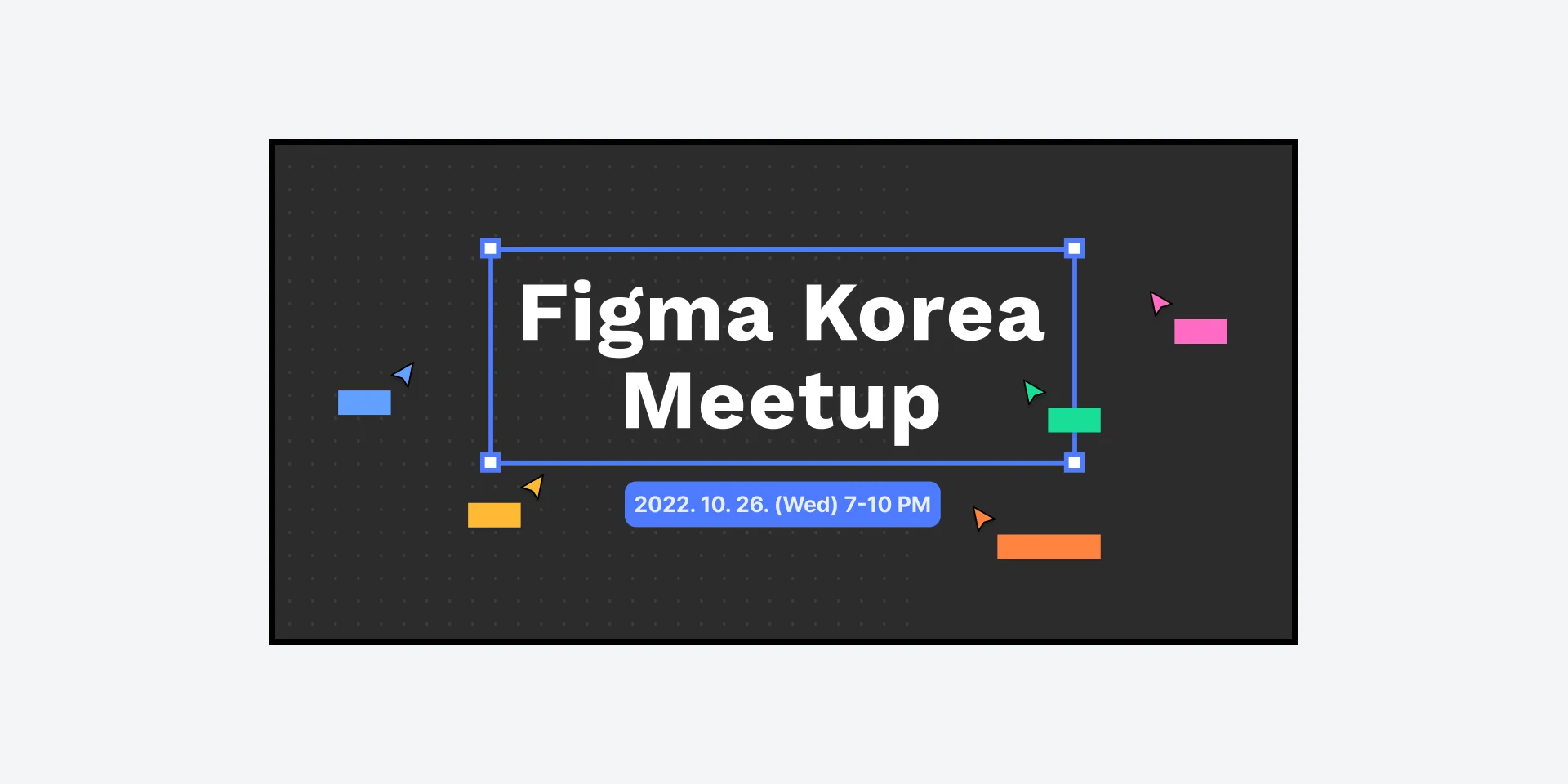
This article collects materials from the Figma Korea Meetup held in October 2022. I hope it is useful to everyone who showed interest in the event.
What I thought while preparing
We had only three to four weeks from the beginning of planning to the event itself. The Figma Korea organizers, along with our speaker Minhee, led most of the planning and operations. Everyone also had a full-time job, so we tried to design a program that would be both efficient to prepare and meaningful to attend.
To make full use of one of Figma's core strengths, real-time collaboration, we built the Q&A in FigJam. The result created a joyful visual field that felt appropriate to Figma and made everyone's participation visible. It also gave us access to a wide range of thoughtful questions.
For the in-person meetup, Seulgi from the organizing team produced label sheets that worked as name tags. They were especially useful in a venue where many attendees were meeting for the first time.
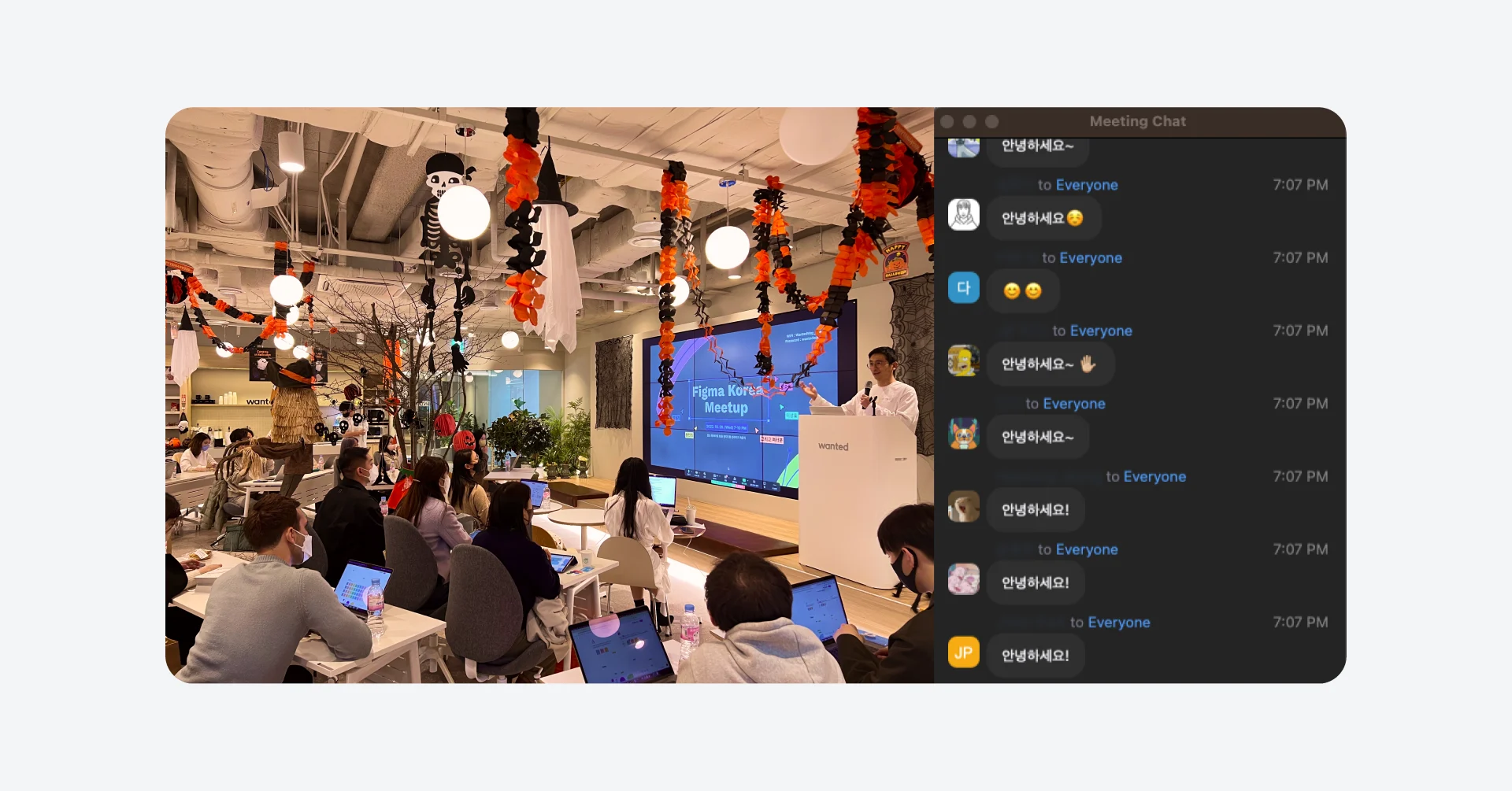
At the time, I was both a Figma Korea organizer and a designer at Wantedlab. Wanted describes itself as a platform for career growth, so the company was supportive of the meetup and had an excellent office lounge that could host it. The space helped the event feel more complete.
Response after registration opened
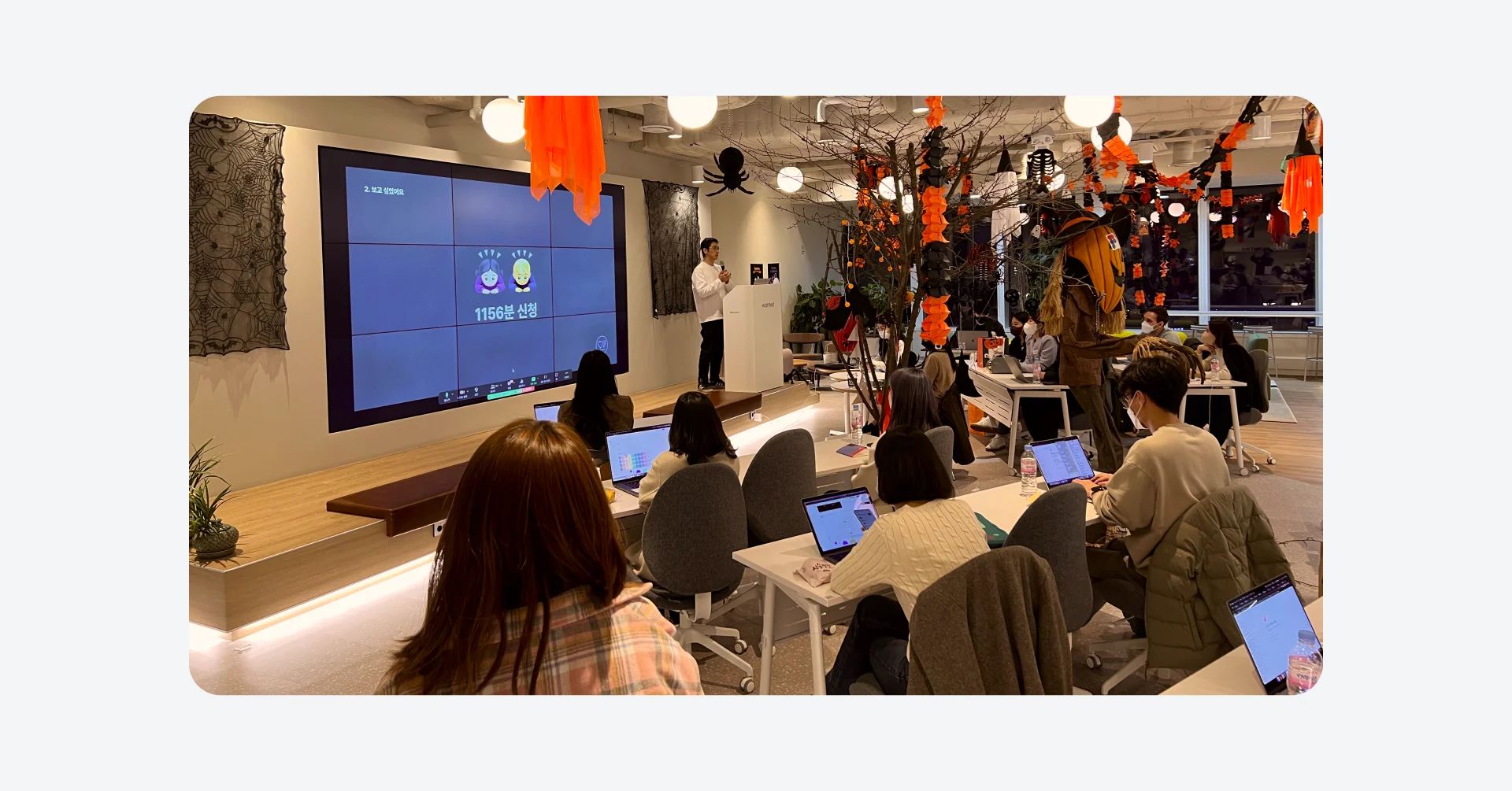
- A total of 1,156 people applied.
- Competition for an in-person seat exceeded 35 to 1.
- Registration required a Wanted account, which made the level of interest over such a short period even more encouraging.
How we selected in-person attendees
- Ask applicants what they hoped to gain from the meetup.
- Select people whose expectations matched the program and who answered thoughtfully.
- Reserve part of the audience for applicants outside design, including PMs and developers.
Feedback
Near the end of the event, we surveyed both online and in-person attendees. Every session received an average satisfaction score above 4.0.
The feedback also identified real shortcomings: presentation audio occasionally cut out, some attendees wanted a broader mix of topics, and the actual session timing differed from the advance notice. Those candid responses gave us useful insight for future events.
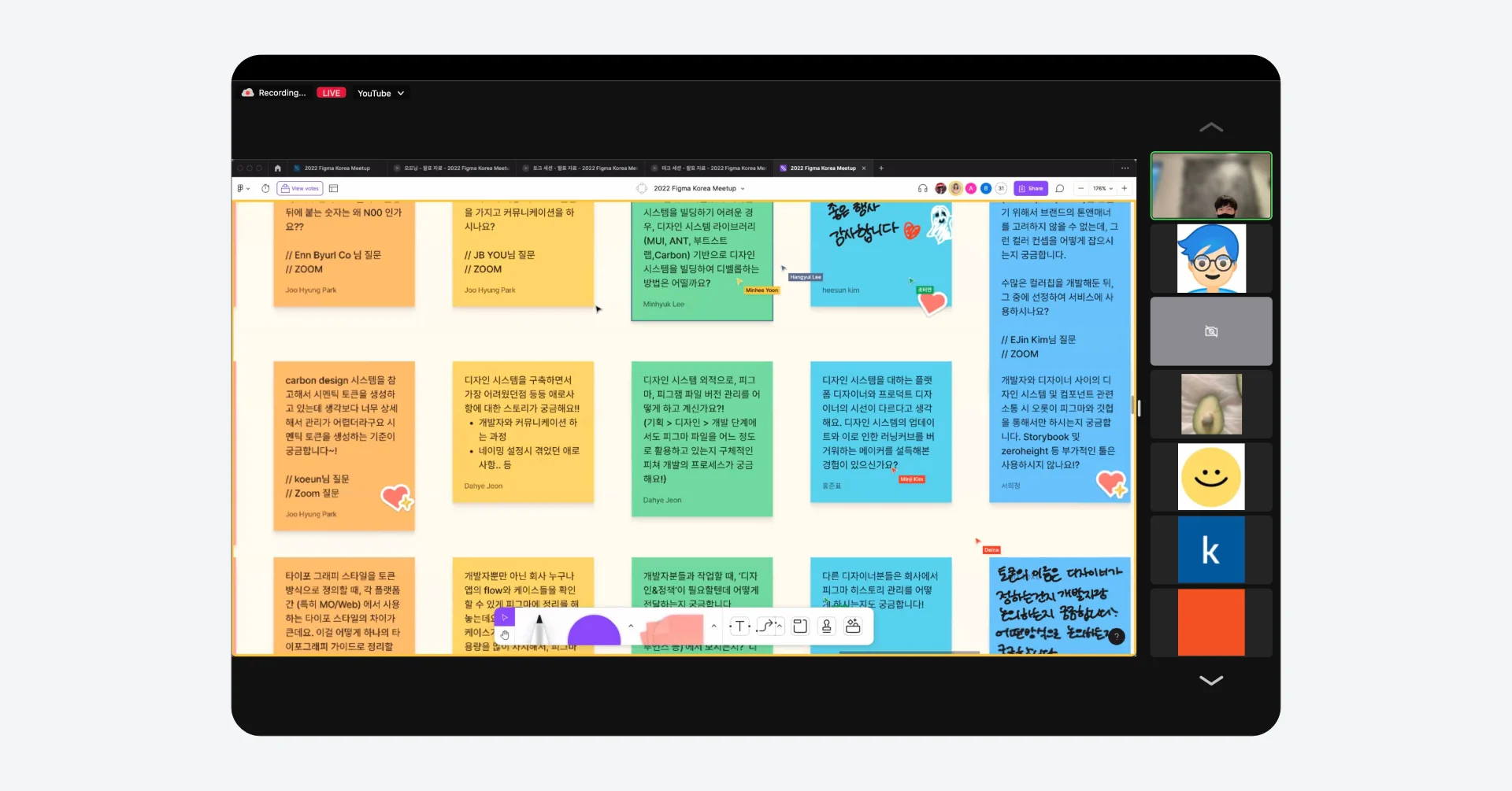
Unexpected variables
Running an event online and offline at the same time was difficult. I learned the importance of choosing what to prioritize and listing the help needed before the day itself.
- Our Zoom plan supported up to 1,000 concurrent viewers, so we also researched another broadcast route for applicants. Fewer than 1,000 people ultimately joined, but the risk led us to prepare a YouTube streaming setup as a fallback.
- One organizer could not reach the venue because of an unavoidable situation. They still guided online attendees and collected questions remotely. Because this was our first time running this format, some on-site roles became clear only on the day.
Thank you as well to the Wantedlab colleagues who helped us operate the venue.
Event materials
Closing
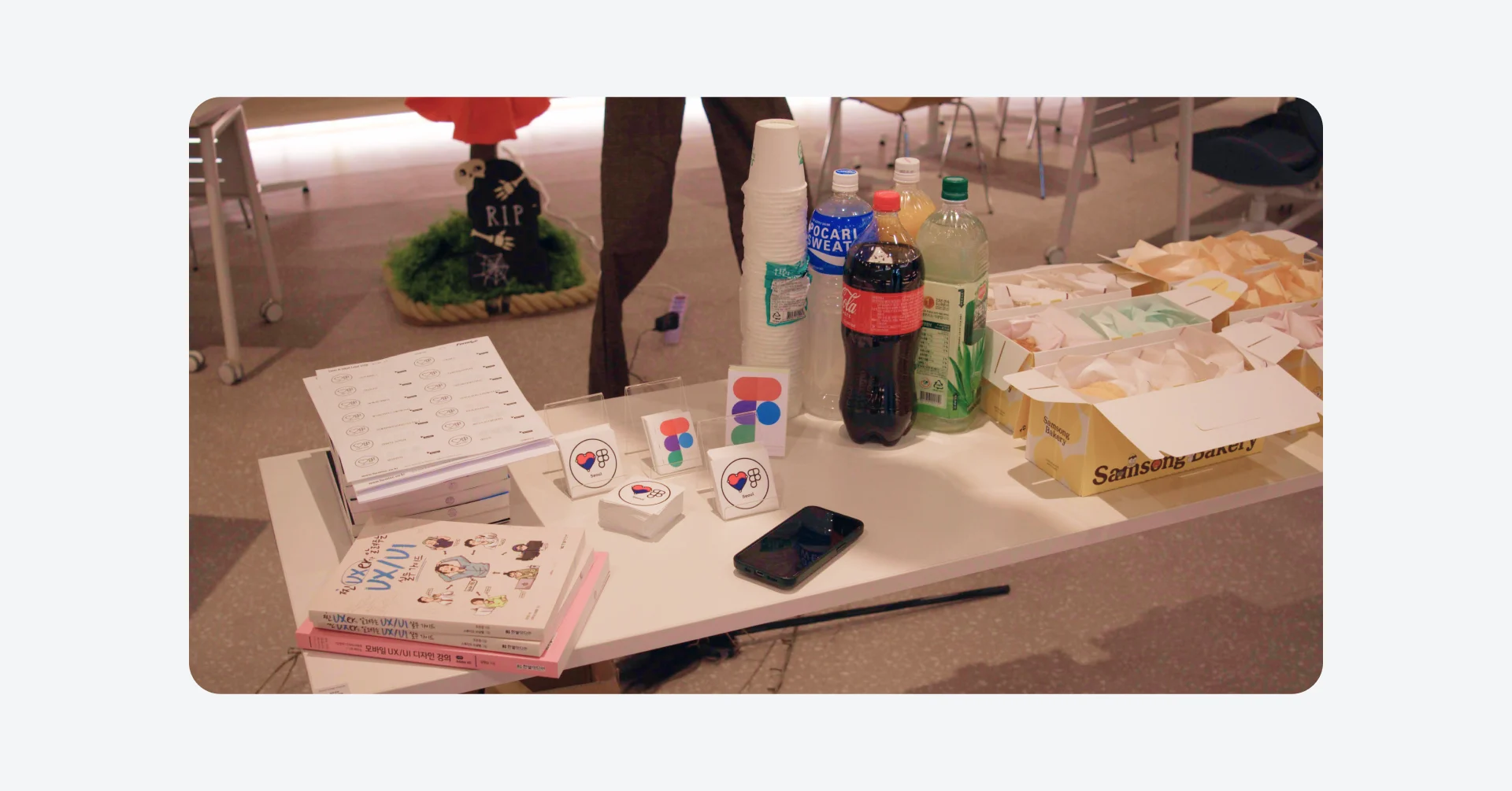
We prepared stickers, Figma books, and other merchandise that was not listed on the event page. Thank you to Hanbit Media for sponsoring the books and to Seulgi for producing the merchandise.
Figma also sent official merchandise, but international shipping took too long for it to arrive before the event. The package alone felt like a good reason to hold another meetup.
Jihong Kim from Design Spectrum volunteered to record a sketch video and take photos. His work helped us remember the day more vividly.
This was my first time organizing an event that received this much attention. There were shortcomings and unexpected variables, but active participation from so many places helped us finish well. I also ran a personal retrospective afterward and applied what I learned to the next event.
At the time of writing, I planned to publish a more detailed account of the preparation process on Wanted Design's Brunch.