Hello, I'm designer Sanghyo Yee. In August 2024, I had the opportunity to join Hyungjin Gil, Sungkwang Kim, Seungho Cha, and our moderator Jihong Kim as a panel speaker at INFCON. Our session was titled The Light and Shadow of Design Systems.
This is a brief retrospective on how we prepared. It may be especially useful if you missed INFCON but were curious about the atmosphere, or if you want a look at how we shaped the session and what we discussed.
From invitation to acceptance
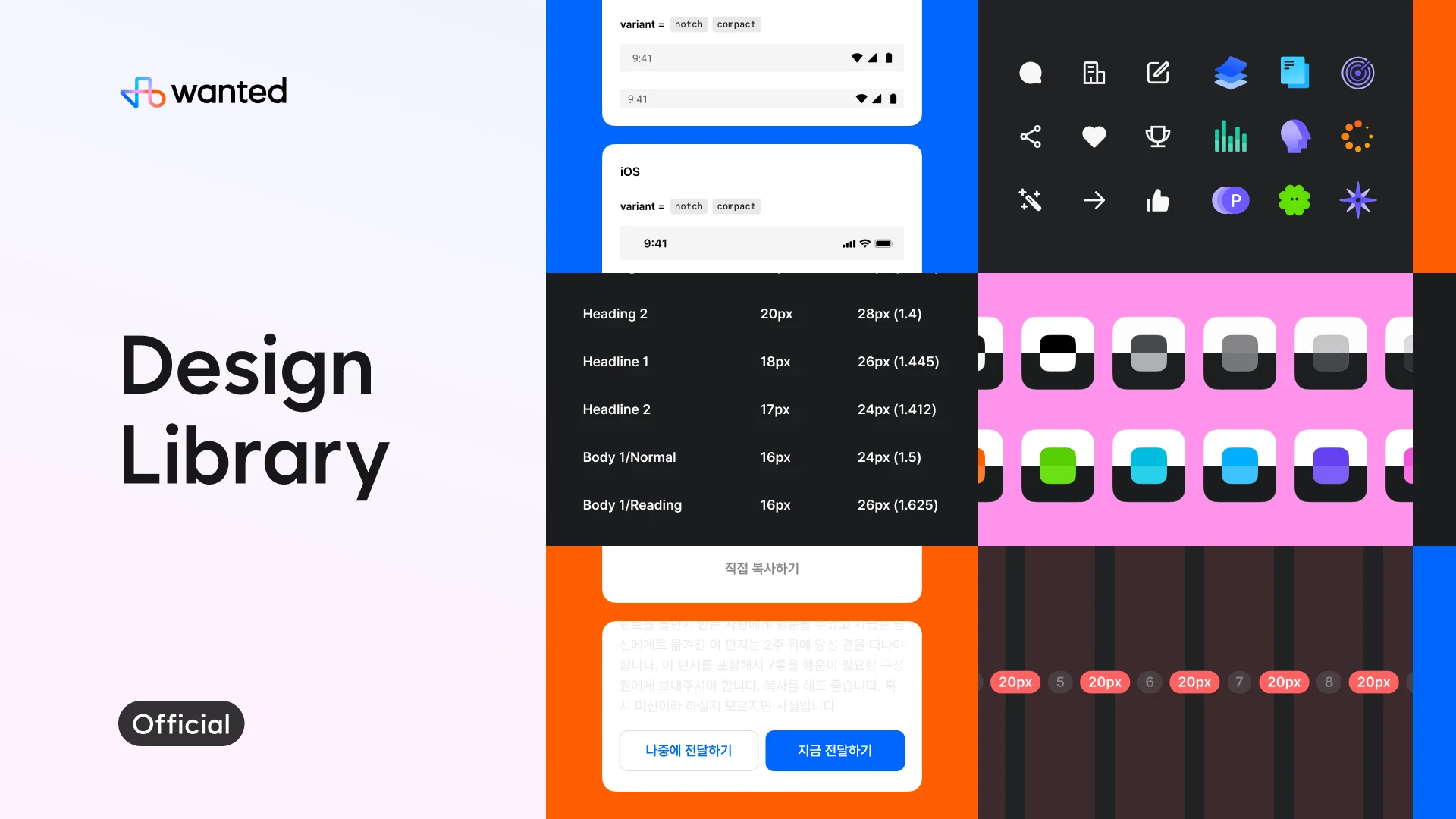
We had recently released the Wanted Design Library. Around April, the INFCON team invited us to take part in a panel discussion related to that work.
We were already busy with product work, but it was difficult to turn down an invitation to one of the Korean tech industry's largest events. As a team trying to build and share a design system, INFCON felt like a valuable opportunity.
The challenge was preparation time. Our first idea was a Q&A-led panel that would not require a heavy production process. As the discussion continued, however, we kept adding substance. The final format became a hybrid: half presentation and half responses to questions submitted in advance.
We had also imagined a small room with a few dozen attendees. During planning, we learned that we had been assigned a conference hall for roughly 500 people. That was the moment we realized we needed to prepare a little more seriously.
As we considered the theme, we agreed that it would be more useful to share the very real, sometimes painful process of building and experimenting with a system. The industry has many stories about the benefits and success of design systems, but fewer accounts of the difficult work that comes before those benefits. We therefore tried to show both sides: the positive impact of a design system and the challenges required to sustain one.
Preparing efficiently with Figma Slides
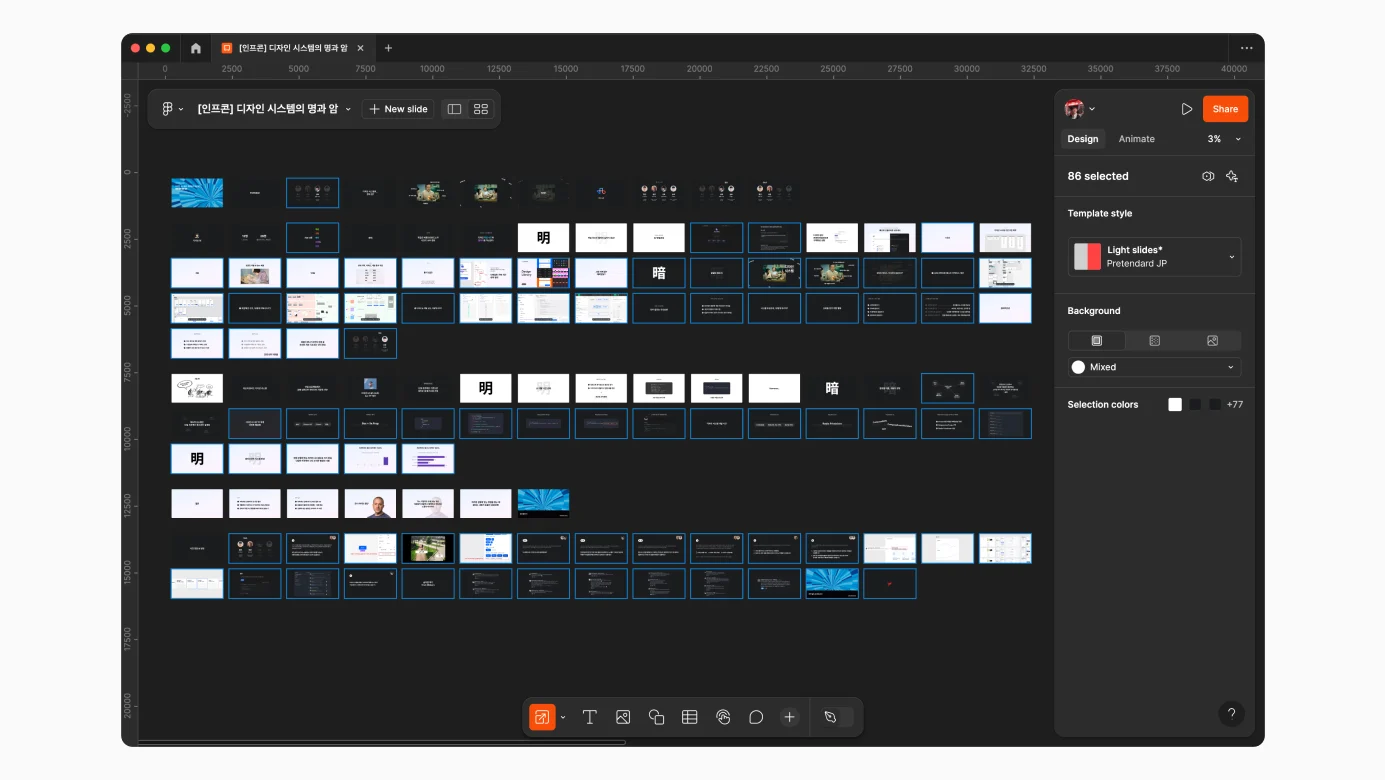
Once the direction was clear, we began drafting the presentation in Figma. Then, at exactly the right moment in June, Figma announced Figma Slides. I moved the entire deck into the new tool.
At the time, we were refining the session with developers. They did not have edit access to our Figma design files, so every content change depended on a designer and created a bottleneck. Figma Slides let everyone edit. That made it much easier to bring the thinking of five speakers, including the moderator, into one place while keeping the visual style consistent.
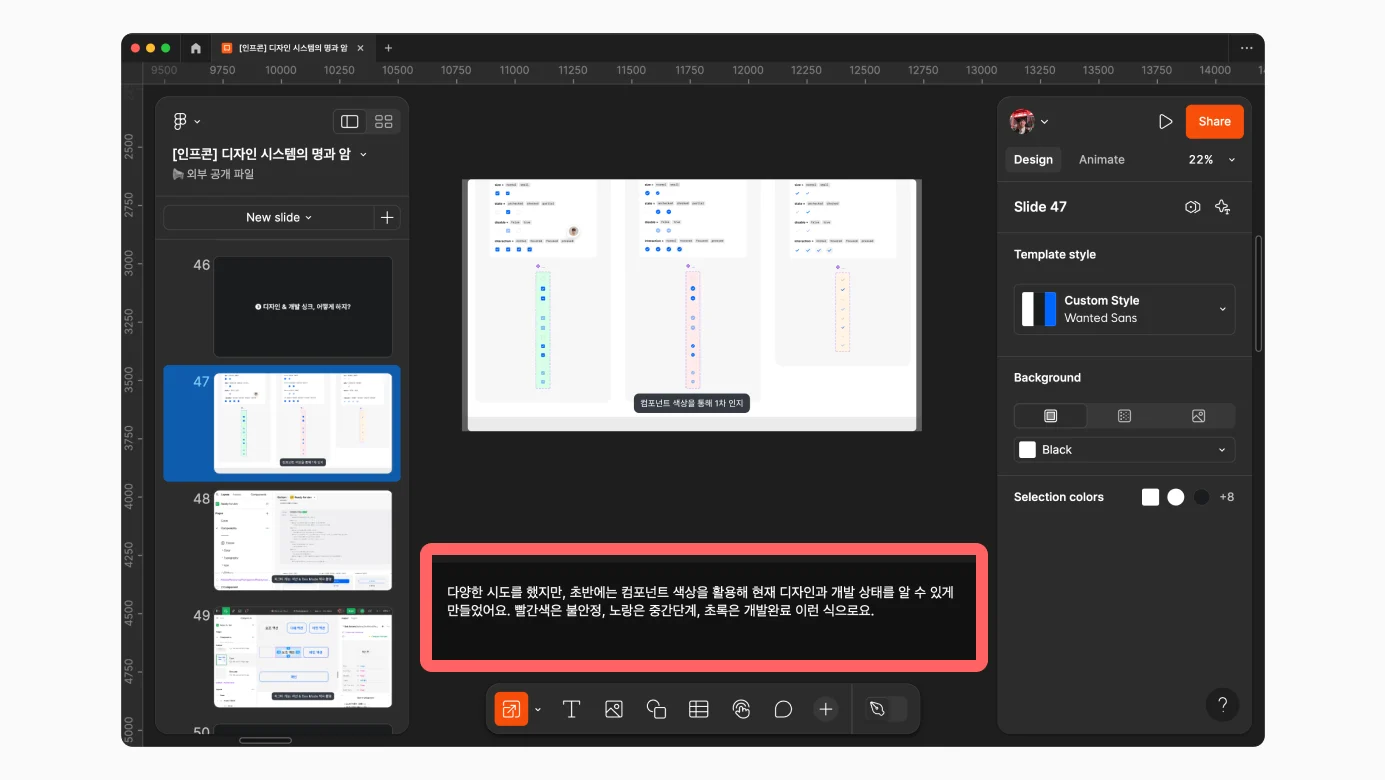
Later in the process, we wrote the script alongside the deck. Unlike our previous workflow of making presentation slides in regular Figma, Slides let us manage the script as speaker notes that remained visible during the actual conference. That was surprisingly convenient.
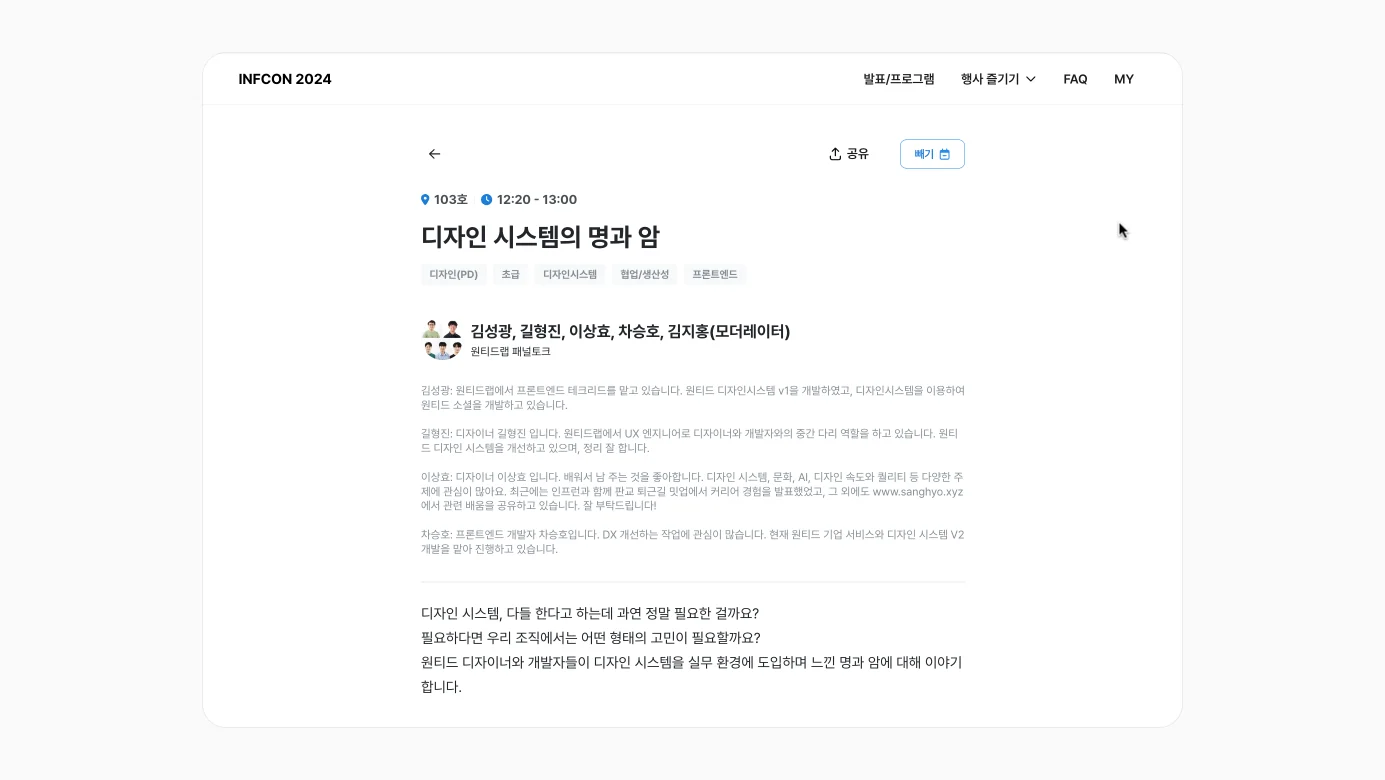
While we were preparing, the INFCON landing page opened. We collected the questions submitted through registration and used them to shape the final version of the session.
At the venue
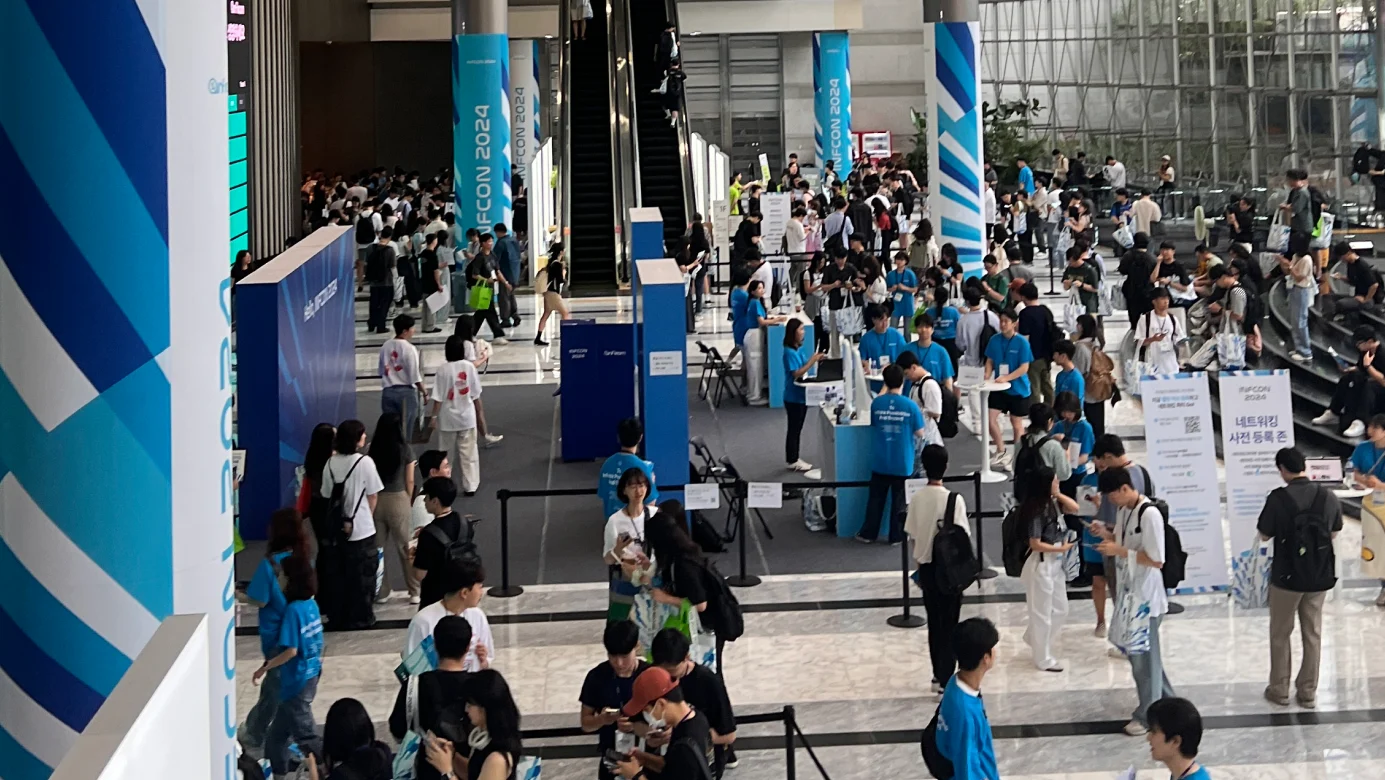
On the day of INFCON, we made our way through a very large crowd and completed our final preparation in the speakers' lounge on the second floor. I also had time to visit and participate in several booths.
What interested me was the range of topics. Alongside engineering agendas, the program covered the broader tech industry, design, metrics, UX writing, product, and more. The attendees seemed just as varied in their roles and backgrounds.
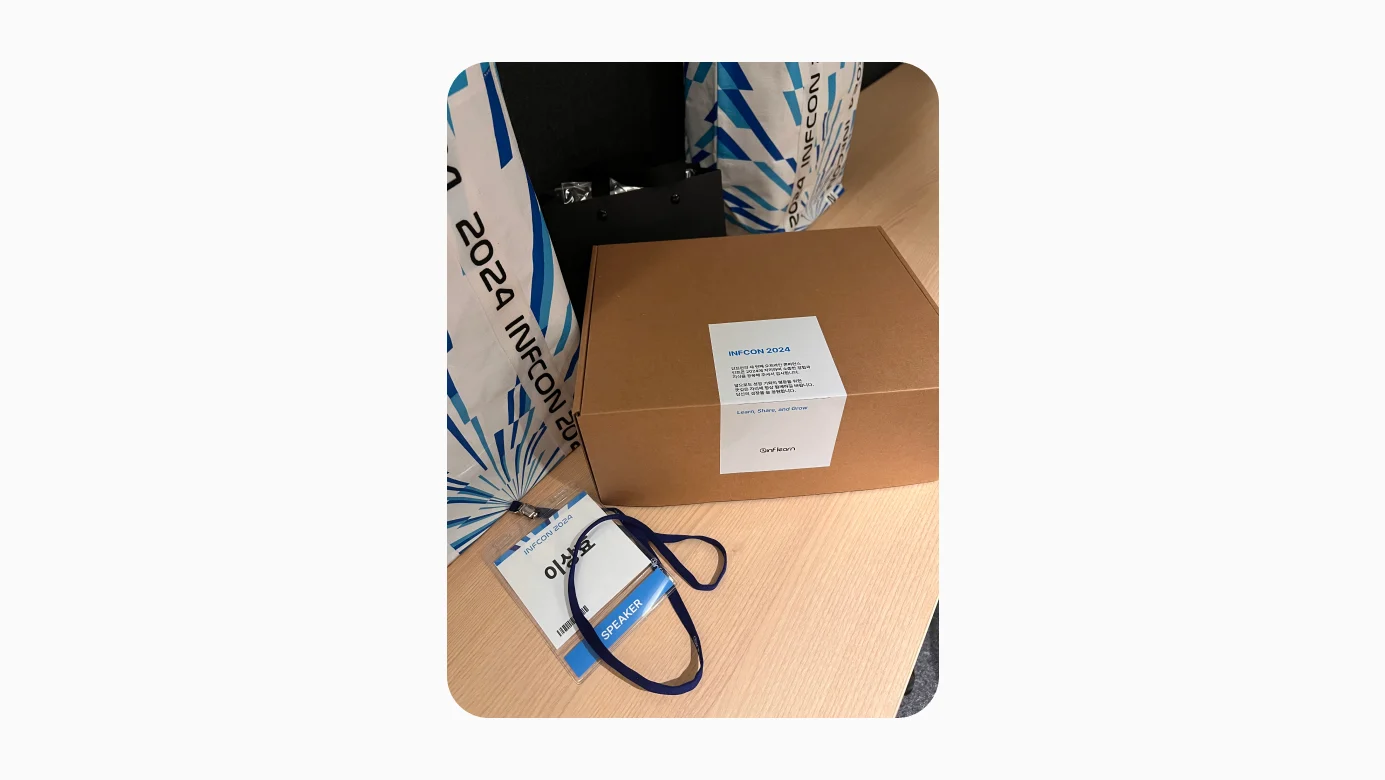
When we checked in, the prepared gift package, speaker-only T-shirt, and nameplate immediately stood out. I was too excited opening everything to take a proper photo, but the small glass nameplate and multipurpose charger were memorable. The charger is already installed and in regular use at home. Thank you, Inflearn.
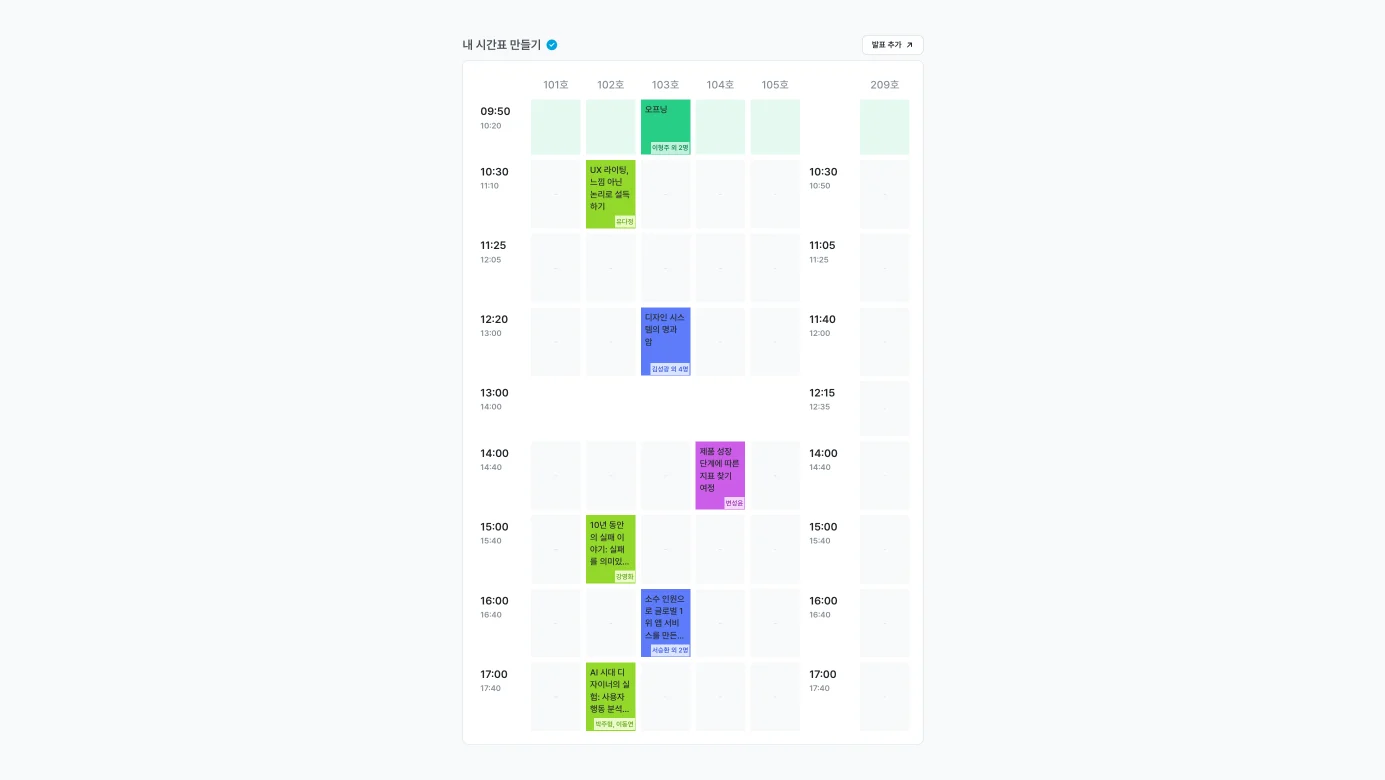
After finishing most of our preparation, I used the INFCON page to build a personal timetable for other talks I wanted to attend. At the venue I ended up relying more on the printed brochure, but it was still fun to assemble my own schedule, even at the last minute.
Our session
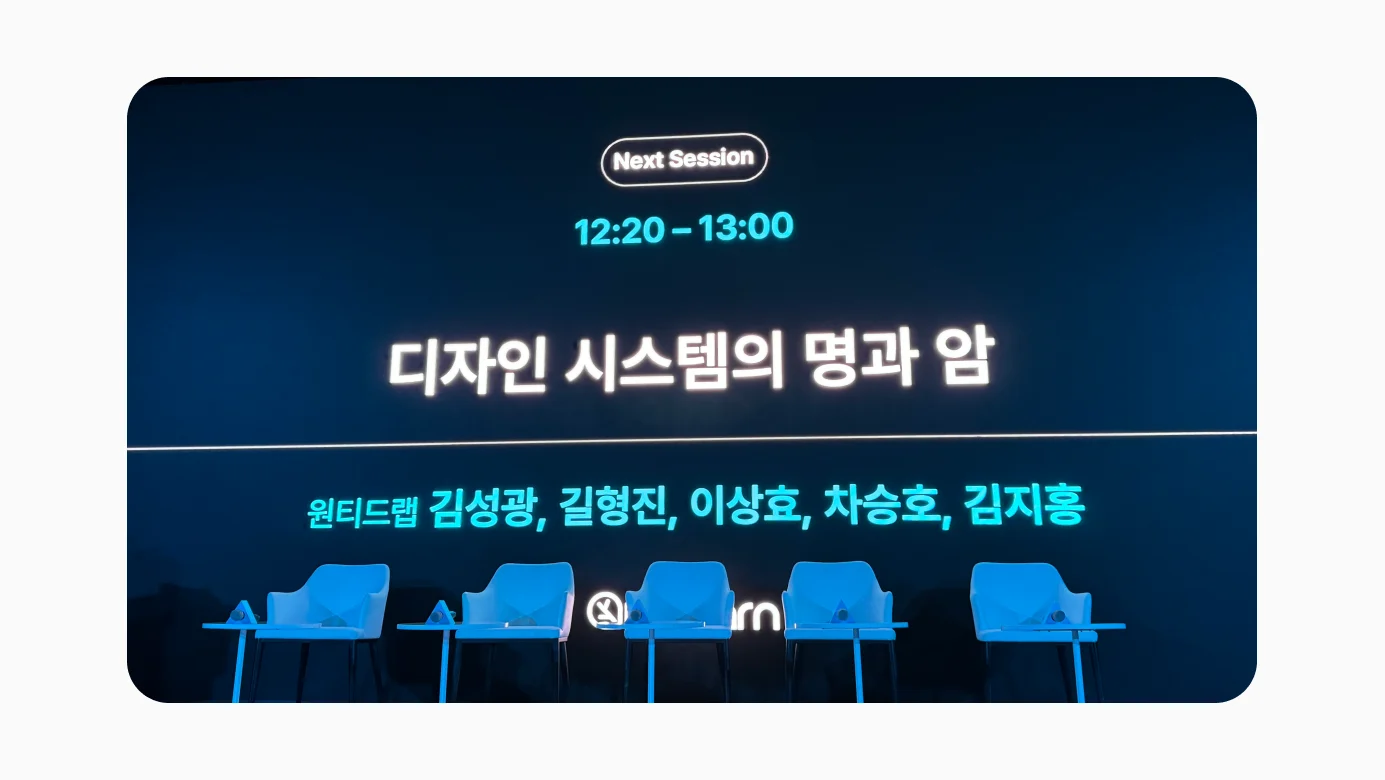
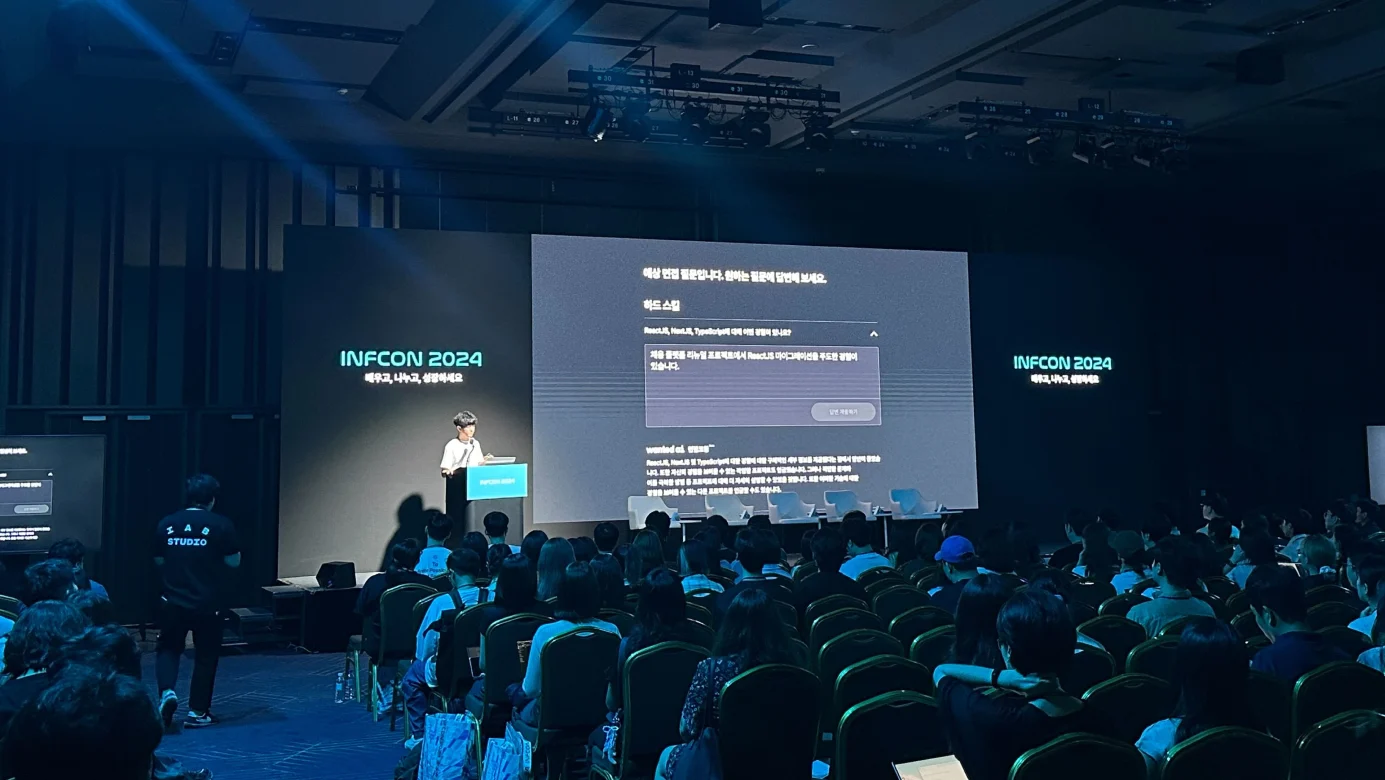
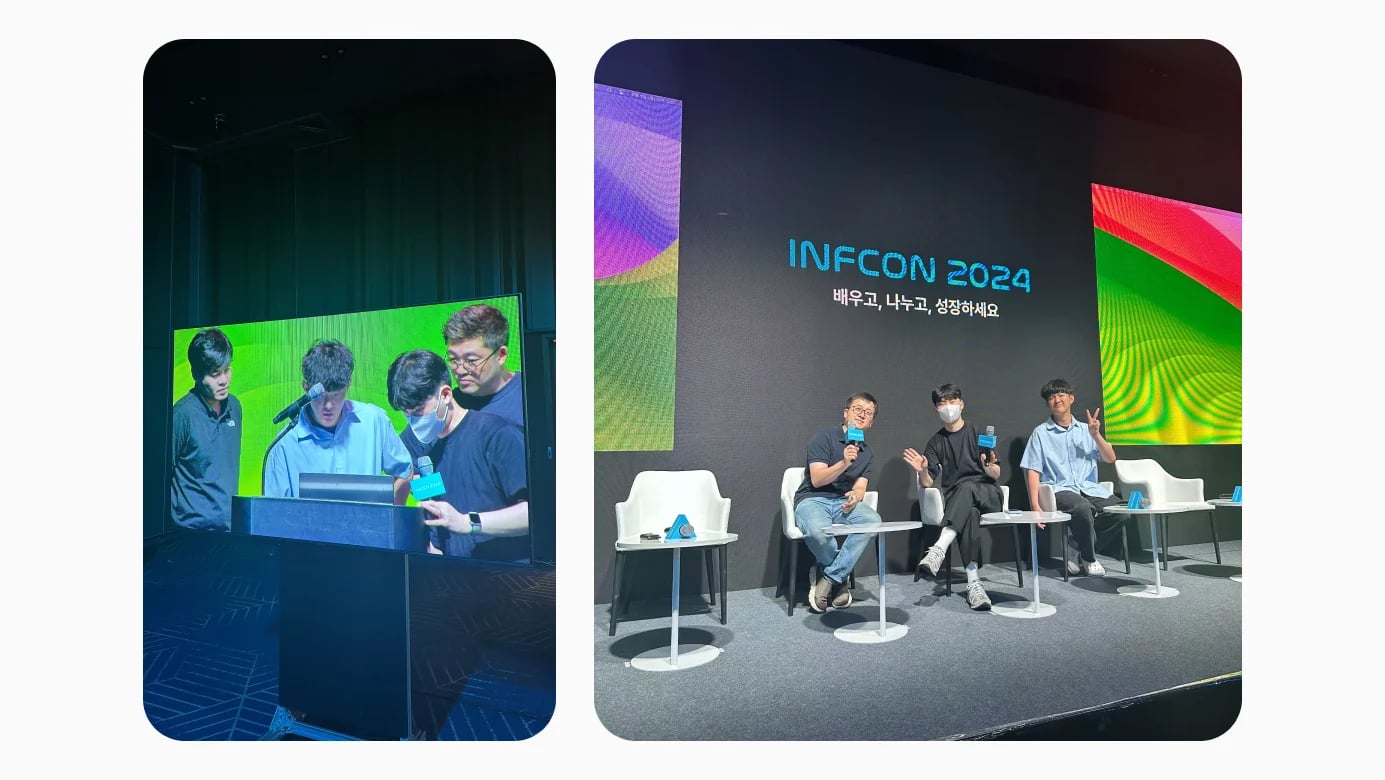
Our session ran between noon and 2 p.m. I was surprised and grateful that so many people joined us during lunchtime.
We shared how we used our system to launch an unexpected internal AI interview-coaching project quickly, then discussed the advantages and disadvantages, the light and shadow, that we experienced while building a design system.
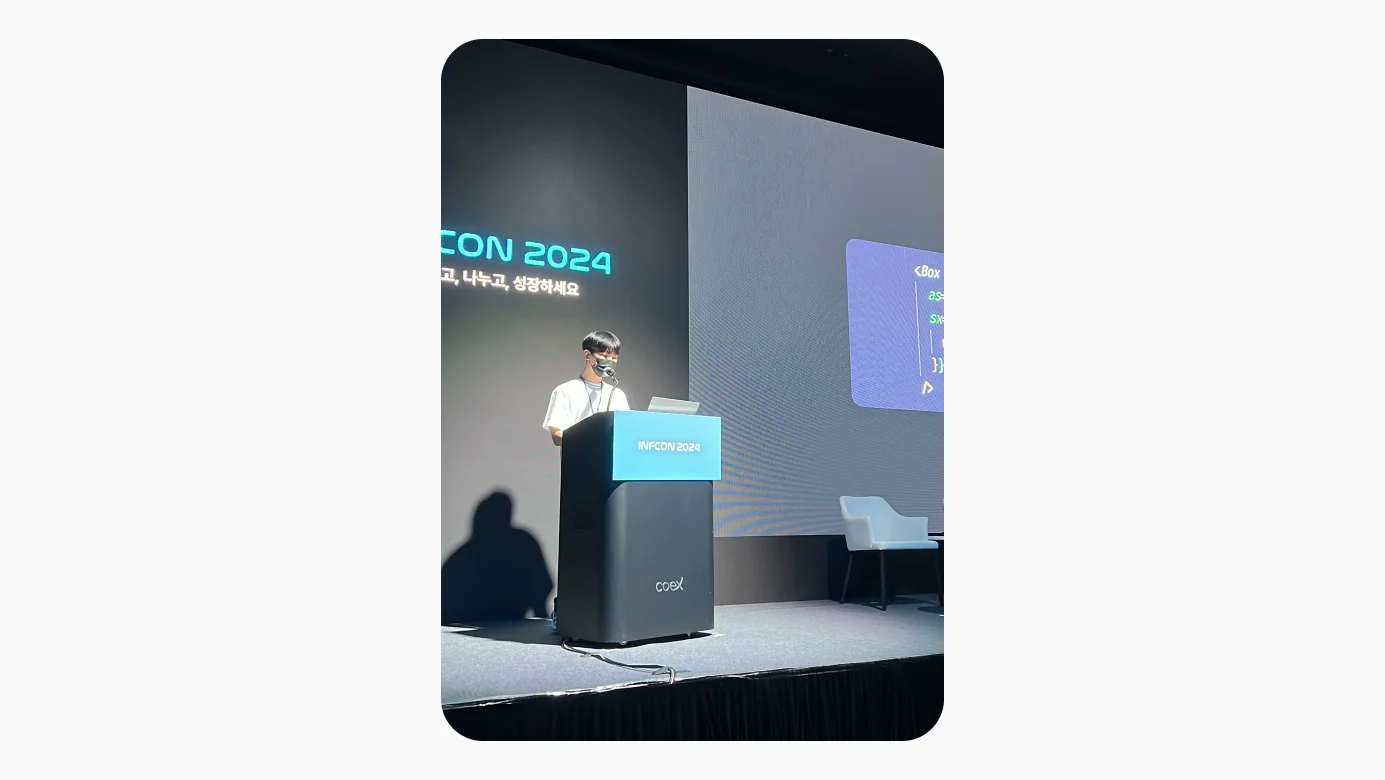
The session consisted of ten minutes from a design perspective, ten minutes from an engineering perspective, and a twenty-minute panel discussion. We did our best to answer the submitted questions with care.
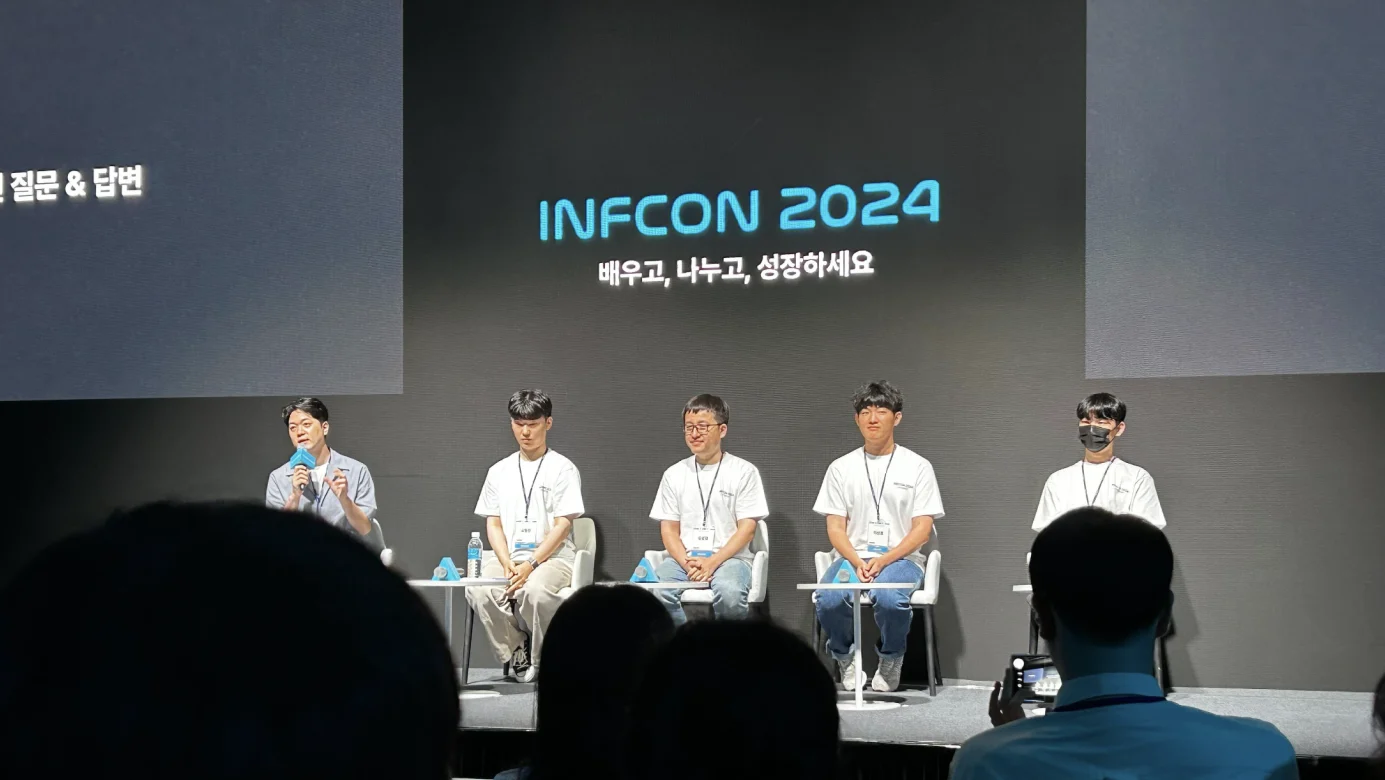
The pre-submitted Q&A was led by Jihong, our moderator, Hyungjin, a UX engineer, and Sungkwang, a tech lead. After the forty-minute session, we moved upstairs with attendees who had follow-up questions. It was valuable to talk directly with practitioners who were considering a design system or already building one.
The core of our talk was:
- Design systems offer substantial benefits, but they are also difficult to maintain and cultivate over time.
- Because of that, continuous communication, alignment, and the effort to protect priorities are essential.
- Every company has a different context. Rather than copying another company's example blindly, start with what your own organization needs most.
For anyone who missed the session, the Wanted Design Library remains available in the Figma Community. At the time of writing, we were also waiting for the recorded INFCON session to be released.
Networking after the session
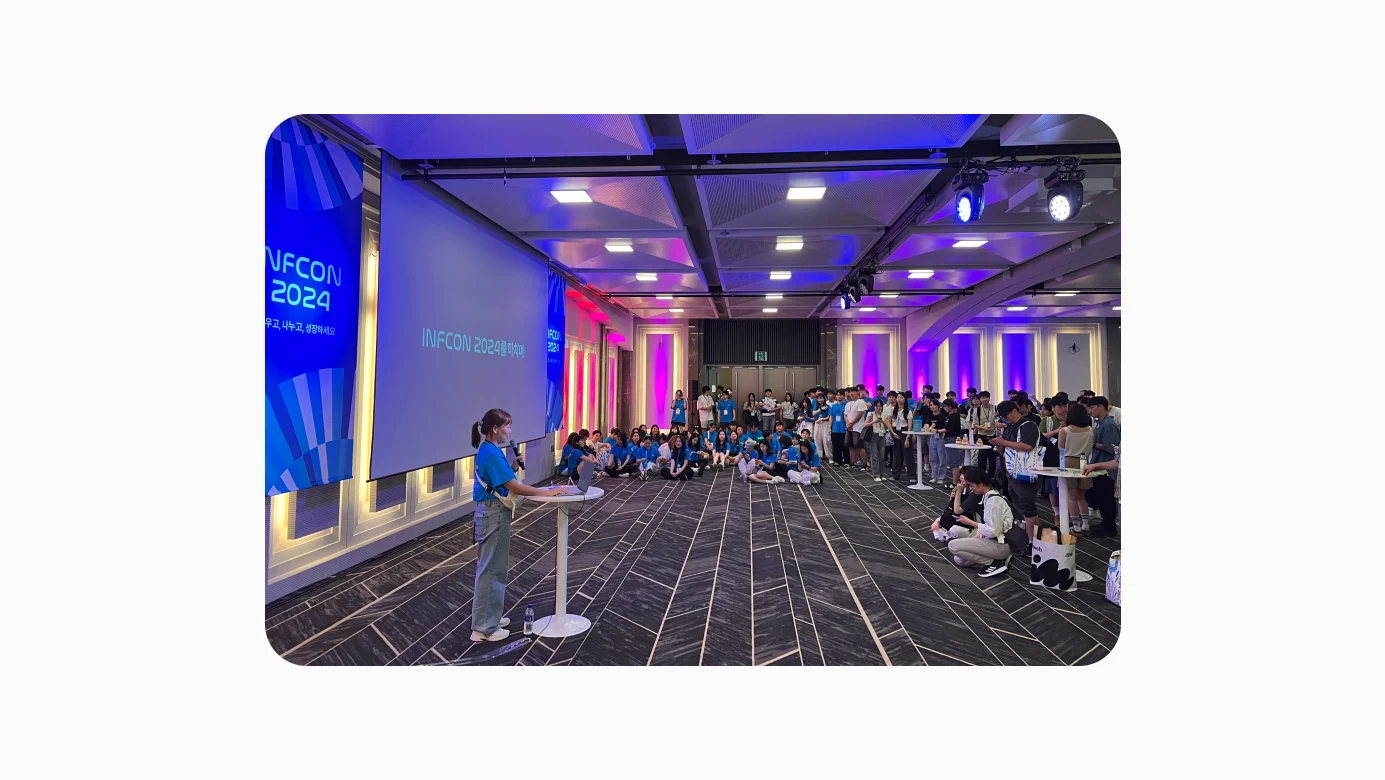
The event continued for roughly four hours after our talk. I attended afternoon sessions and joined a networking session on the second floor.
INFCON occupied two floors across the COEX Grand Ballroom and ASEM Ballroom. Despite the crowd, the circulation remained comfortable, and I could enjoy the rest of the program without much friction. I met people from many parts of the industry, and Inflearn closed the day with a final session.
Closing
The talk grew out of nearly four months of discussion and preparation. I hope it was useful to everyone who joined us. Thank you to those who made time for the session and to everyone reading this retrospective.
At the time of writing, we planned to share the deck and script when the INFCON recording became available. Most of all, I hope our experience offered at least one useful reference for teams working through similar questions.
Sanghyo Yee