Intro
Hello, I'm designer Sanghyo. I help run Friends of Figma Seoul, Figma's official community in Korea, and share news with the local community. This is my retrospective on the Figma Design / Dev Leaders Meetup held on March 15, 2024.
Event scale and response
This was the second meetup officially hosted in Korea by Figma and Tangunsoft. The event was planned for 500 people and reached full capacity about 30 minutes after registration opened. More than 1,000 people applied. The first Leaders Meetup in October 2023 had welcomed 200 people, and the strong response led the organizers to more than double the scale this time.
Event content
The program consisted of six sessions, from a welcome by Scott, Figma's VP for APAC, through networking. Figma CEO Dylan Field, Designer Advocate Corey Lee, and Gmarket product designer Kyungha Koo each led main sessions.
Most of the program shared Figma's perspective on making digital software. The message was that Figma wants to design and support the full software-making experience, not only the design phase. This meetup focused especially on how designers and developers turn designs into real products.
It did not reveal entirely new information, but it was valuable to hear different perspectives and examples around design-to-development work. I was also impressed that an interpretation device was provided at every seat for Korean attendees who were less comfortable with English. It made the sessions much easier for everyone to follow.
What stood out
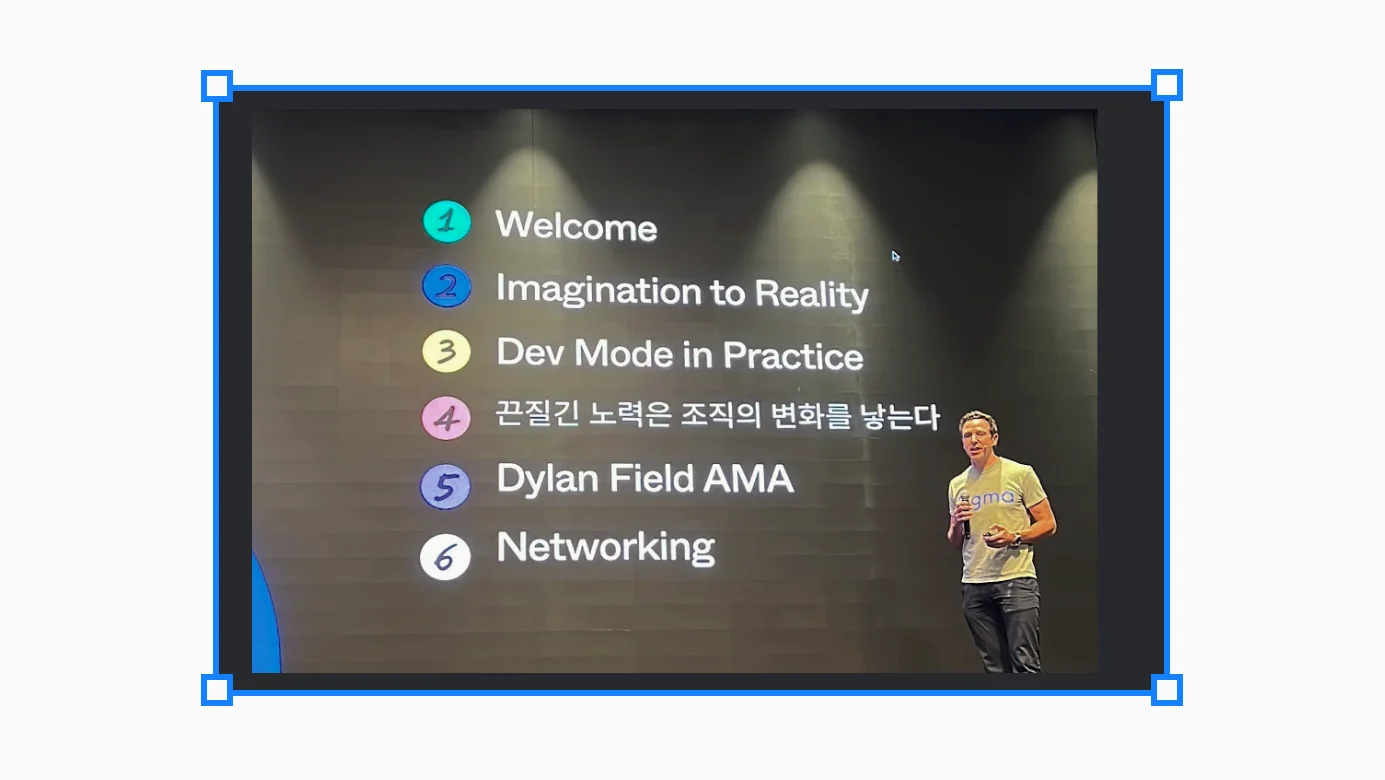
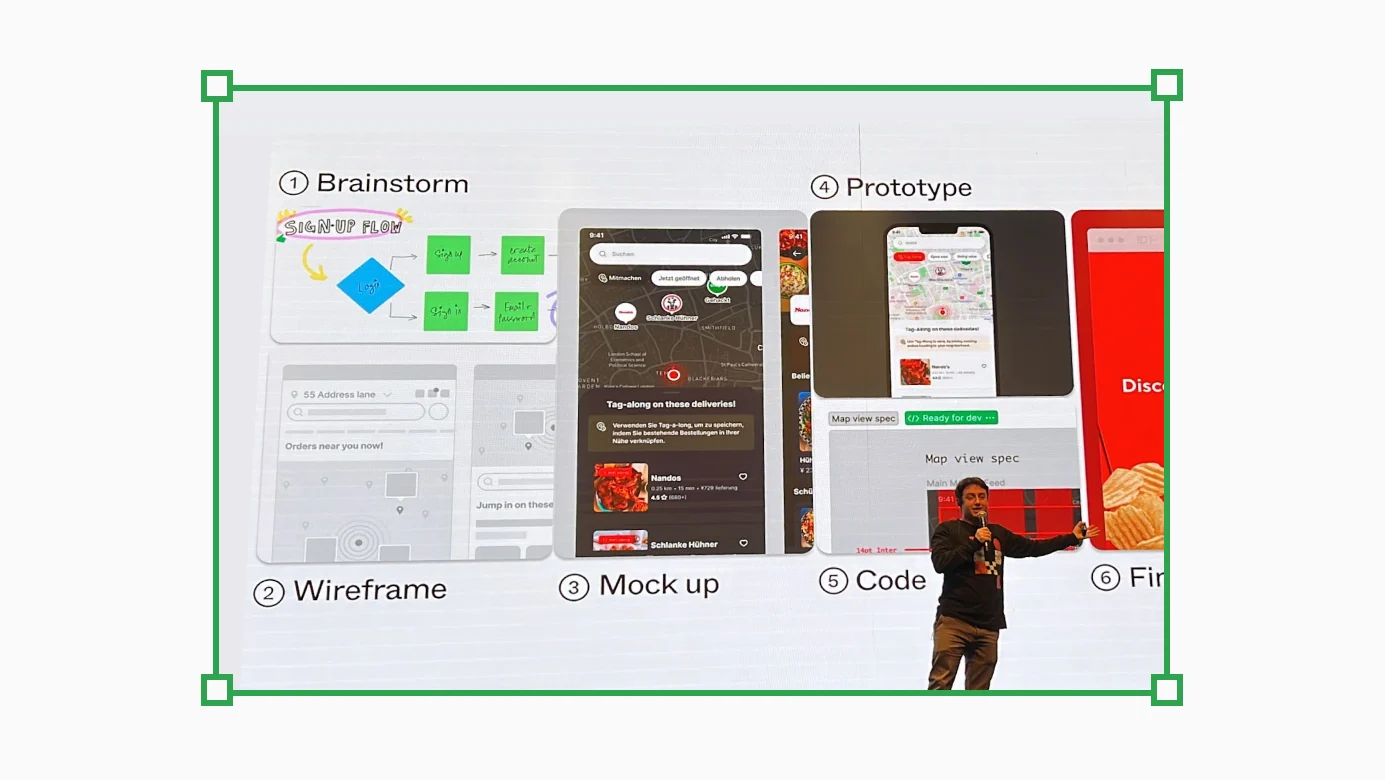
Making digital software can be more arduous than it first appears. Turning an idea into something customers can actually use means dealing with many expected and unexpected cases along the way. Dylan described this as a six-stage journey from ideation and wireframing to design, code, and the final product.
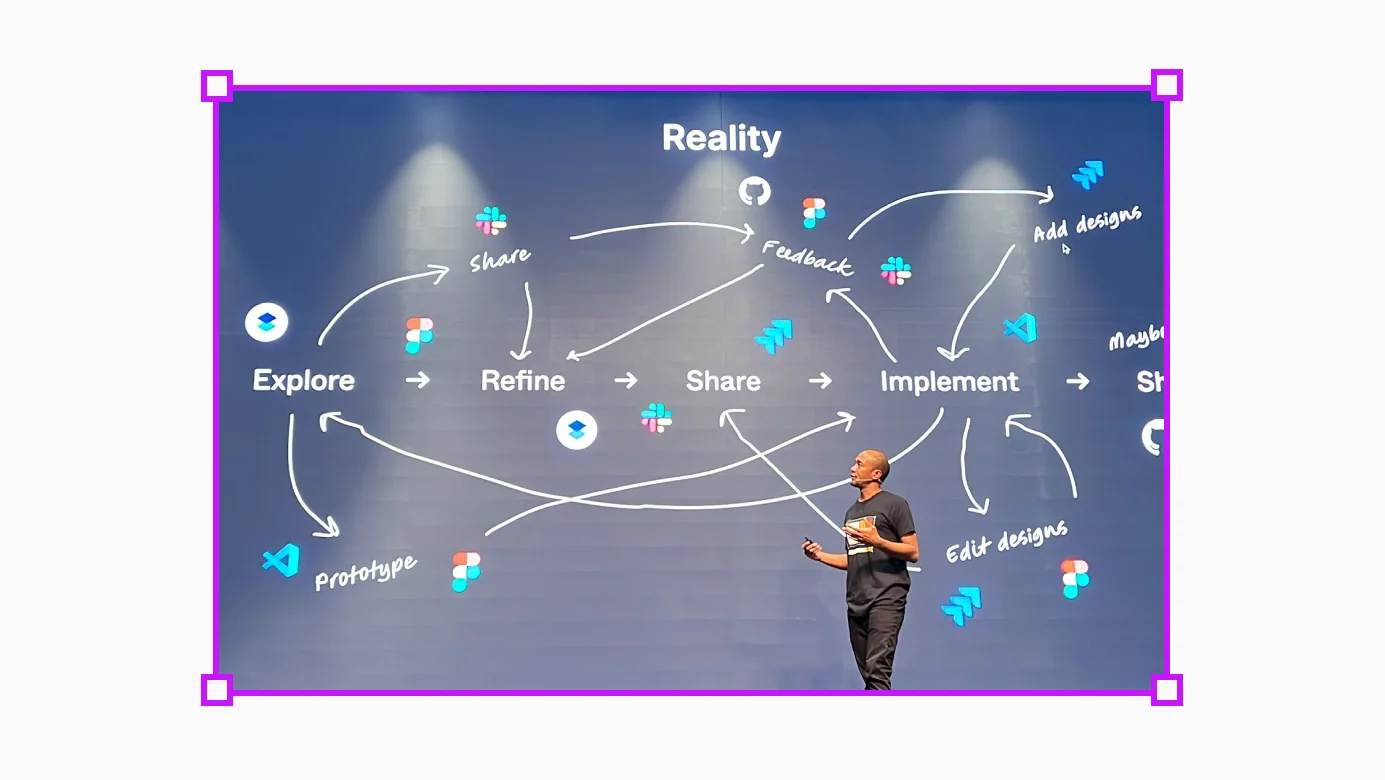
Even after the first design is ready, designers, developers, and PMs spend a great deal of time going back and forth over details: implementing the design accurately while also accounting for scale, edge cases, and policy. The result can drift far from the original concept. Since introducing Dev Mode at Config 2023 as one answer to this problem, Figma appears to have been working to make it part of more organizations. That context shaped the meetup's emphasis on design and development handoff.
AI also took up a meaningful part of the program, from the AI features already released in FigJam to Figma's view that designers will become even more important in a world where we design with AI. No new AI feature was announced, but I left with the impression that several projects were under way across Figma's products and approaching release.
Figma Designer Advocate Corey led a session called Dev Mode in Practice. He staged a realistic exchange between a designer and a developer, making the inefficiencies and pain points easy to see and offering concrete hints for improving the process.
The explanation of Dev Mode followed naturally. Its annotation tools and detailed spec features made the benefits clear even for people who had not used it before. The session showed how designers and developers could discuss product changes quickly while each worked in the environment most comfortable to them.
One phrase I enjoyed was design handshake rather than design handoff. Handoff can sound as though the designer shares a file and walks away, while the real work continues through questions, issues, and decisions after the file is shared. Handshake felt closer to that reality.
I still had reservations. Dev Mode has clear benefits, but it also adds a per-developer cost that teams did not previously pay. Its annotation feature could support not only designer-developer communication but also broader flow and policy discussions, yet stakeholders such as PMs without paid access may not be able to see that information. It was still a new product at the time, so I thought it was worth watching how it developed, especially with Config scheduled for June.
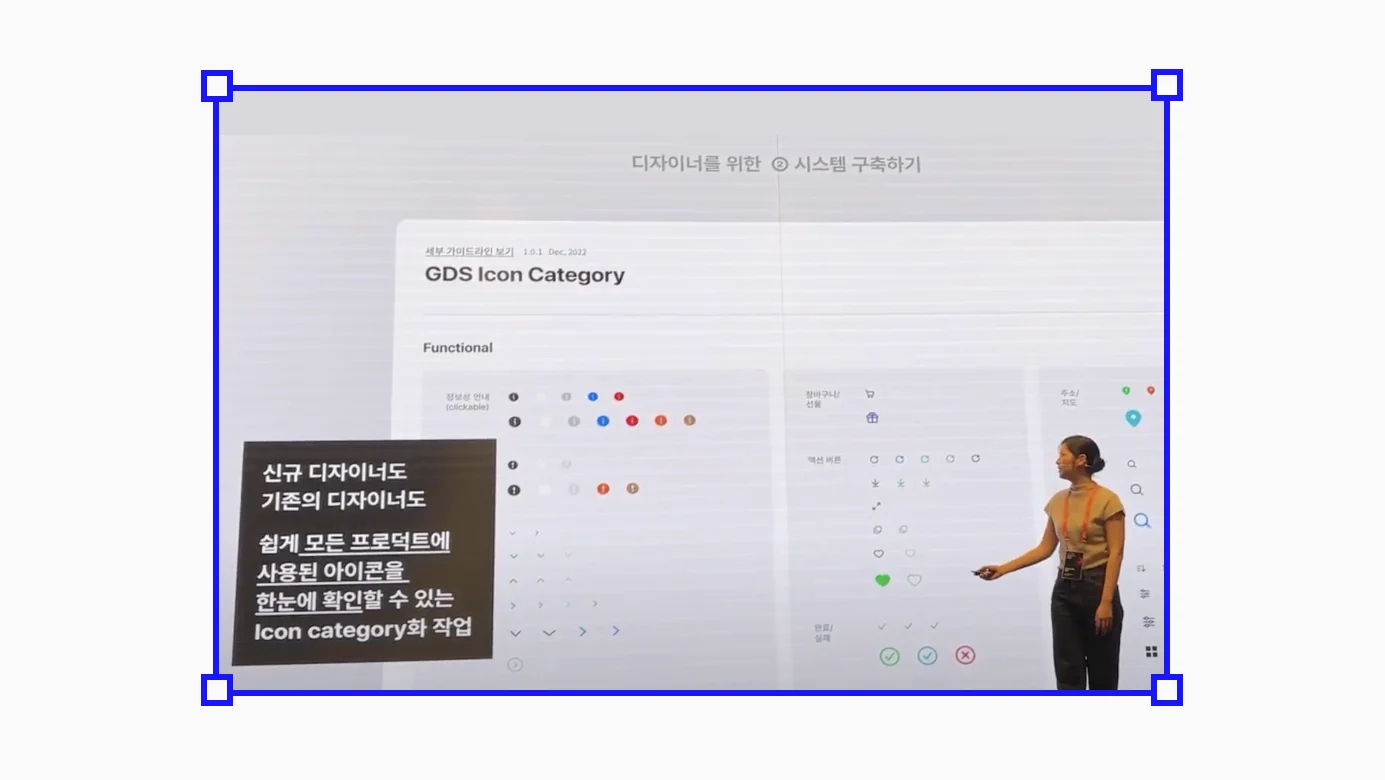
In the next session, Kyungha Koo from Gmarket shared the process of introducing an icon design system across designers and developers. She clearly showed the work required to establish the process and keep it running.
Even as better tools and environments emerge, the people using a system still have to talk, keep aligning, and make a mutual effort to honor what they agreed. The session was a useful reminder that this ongoing collaboration remains the most important part.
AMA session
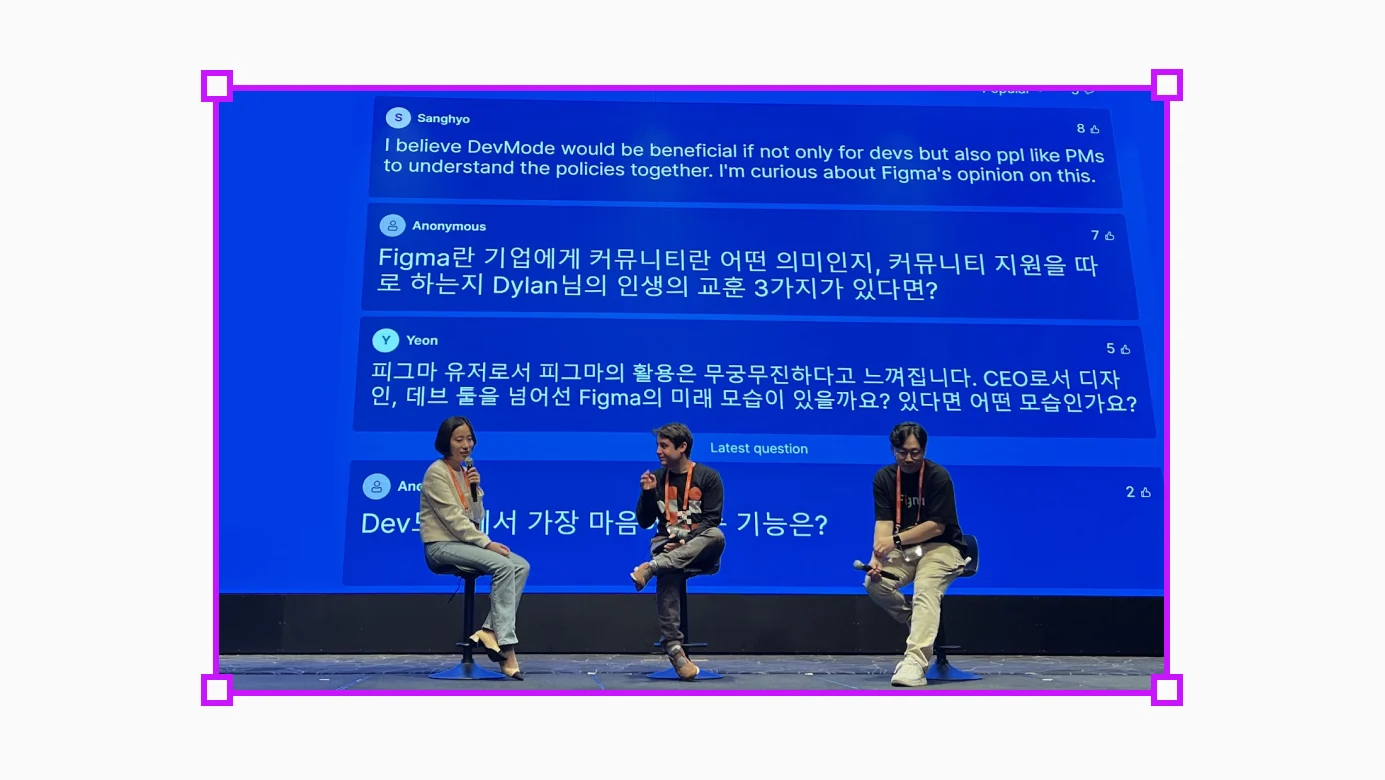
After the main sessions, Dylan held an on-site AMA. Using Slido, attendees could submit and vote on questions in real time. Three exchanges stayed with me:
- Asked what designers need to become leaders, Dylan answered that every designer is already a leader because designers present outcomes to stakeholders and lead projects.
- Asked about AI, he said AI matters greatly, but so does rejecting its suggestions and making an entirely new decision. It made me think again about the importance of continually building the ability to judge and decide for ourselves.
- Asked how Figma listens to users, he said they show work directly to people, ask what they think, and look at both qualitative and quantitative responses.
He also described Figma's very different product-development cycles: some projects quietly repay technical debt over several years, while others go from idea to release in less than a week. One anecdote involved a toy project Dylan had championed. Users said they loved it when shown the idea, but no one actually used it, so the team shut it down. It was a familiar product story, but also a sharp reminder that user behavior, not the status of the person behind an idea, is what ultimately determines success.
Outro
After the sessions, I had time to network with people across the tech industry. It was especially enjoyable to talk with fellow Figma Korea community organizers, Dylan, and practitioners building products in many different places. We also received charming merchandise, including hats and die-cast pins.
I hope events like this continue to happen more often. Thank you for reading.