This is an introduction to product designers, who are designers who design products.
The role of designers continues to expand these days. This is because the scope of work that one skilled designer can do has expanded significantly compared to before. This time, we will learn about ‘product designers’ who expand their capabilities across various fields such as planning, UX, and research as well as UI design.
What is product design?
In just a few years, UI design tools such as Figma have developed dramatically. By utilizing an abundance of templates, various plugins, and powerful frameworks, repetitive design work time can be dramatically shortened. There may be many other factors, but these technological advances have allowed digital designers to have more and more time and opportunity to think about products holistically, and in recent years, the term product designer has begun to appear in this environment.

The literal translation of product design is ‘product design’. At first hearing, it may sound like tangible product design such as furniture or packaging. However, recently, designers who create digital products such as apps and webs are referred to as product designers. This can be seen as the fact that with the advancement of technology, the role of understanding and designing the overall context of digital ‘products’ has emerged centered on digital designers. Accordingly, a job called ‘product designer’ is emerging, which contributes overall to areas other than visual design, such as planning, UX, and development communication.
UX Design Tool Survey - Respondent Occupation
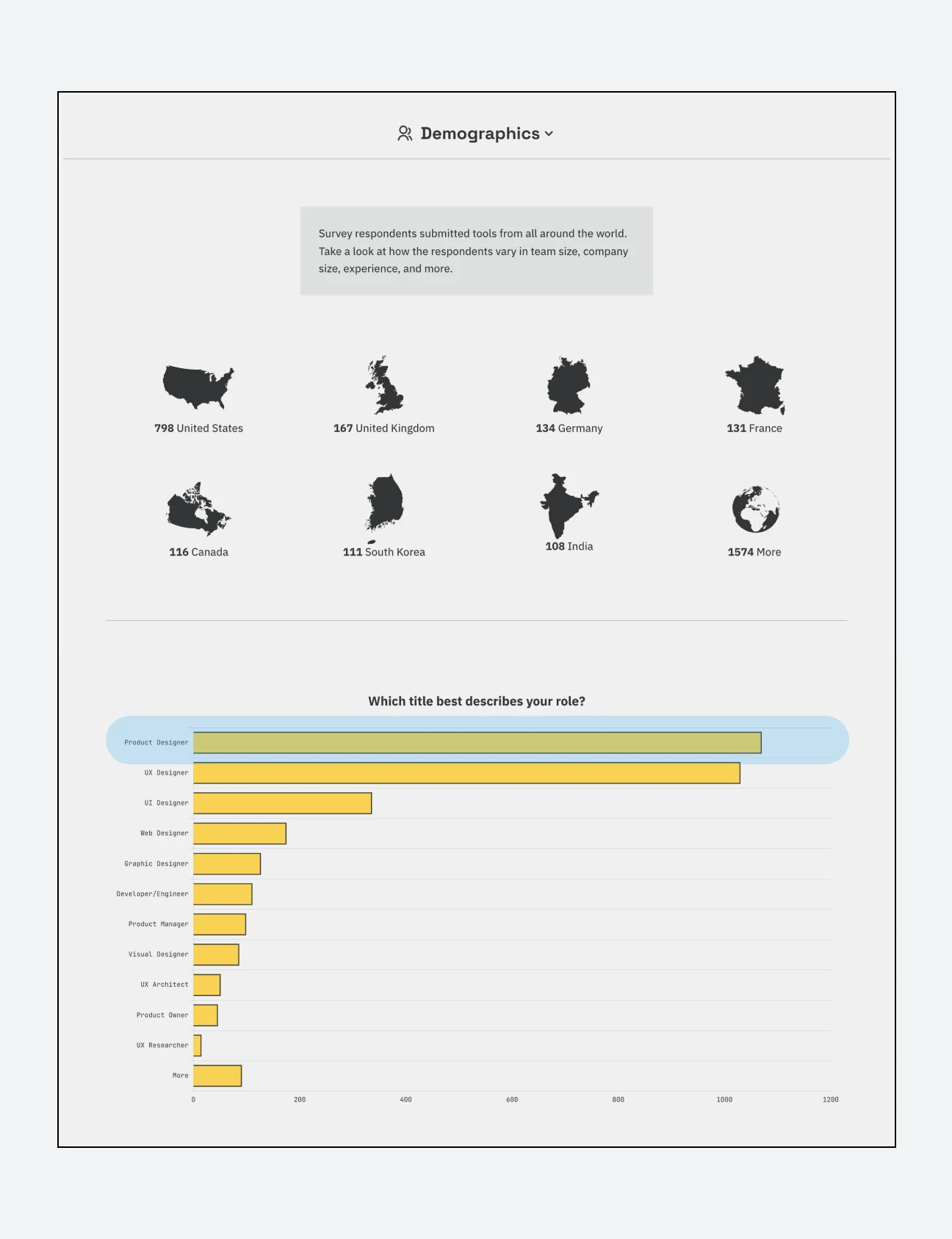
uxtools.co has been conducting a UX design tool survey every year since 2017. If you check the survey, you can see that more than 1,000 out of about 3,000 respondents answered that their job title was Product Designer. You can see that the ratio of product designers to web or graphic designers is already overwhelmingly high.
So what are the things you need to worry about as a product designer? I summarized it into two keywords.
1. Understanding people
Better UI design usually begins with empathizing with and considering a variety of people rather than relying solely on the designer's intuition. This is usually because the designer himself is not the core customer for the product. That's why it's important to understand your core customers, define problems based on them, think about how to solve them, and propose designs.
Understanding customers is even more important when changing an already released design rather than building an initial service. This is because the UI that customers are most comfortable with may be the current UI they are already familiar with. You can create better services by considering these customer sentiments, creating hypotheses, and continuously testing improvements to confirm them.
It is also important to listen to the opinions of team members and stakeholders. This is because you can think about services from a variety of perspectives without being stuck in one perspective, and you can think about the difficulty of actual implementation and what alternatives there are. By quickly sharing the initial design draft with team members and gathering their opinions, you may discover improvements that you could not have thought of on your own.
2. Understanding data and business
Data is a critical way to understand customer needs and measure business success. Recently, as overall IT data accessibility has increased, designers are also being required to have data and business-based thinking skills. The effect of a design update can be measured through quantitative data, and sometimes we can conduct qualitative research such as user interviews and surveys to hear their voices directly. By developing better hypotheses and improving products based on the data collected in this way, you can have an impact on your company's business. This is because establishing data-based hypotheses and repeating design can provide customers with a better service experience, which can contribute to improving key business indicators such as repeat visits and purchase conversion rates.
Of course, there are many design areas that are difficult to measure using data or business indicators alone. Nevertheless, through the mindset of collecting and analyzing various data, you can think about designs that can have a significant impact on your business and brand.
**
**
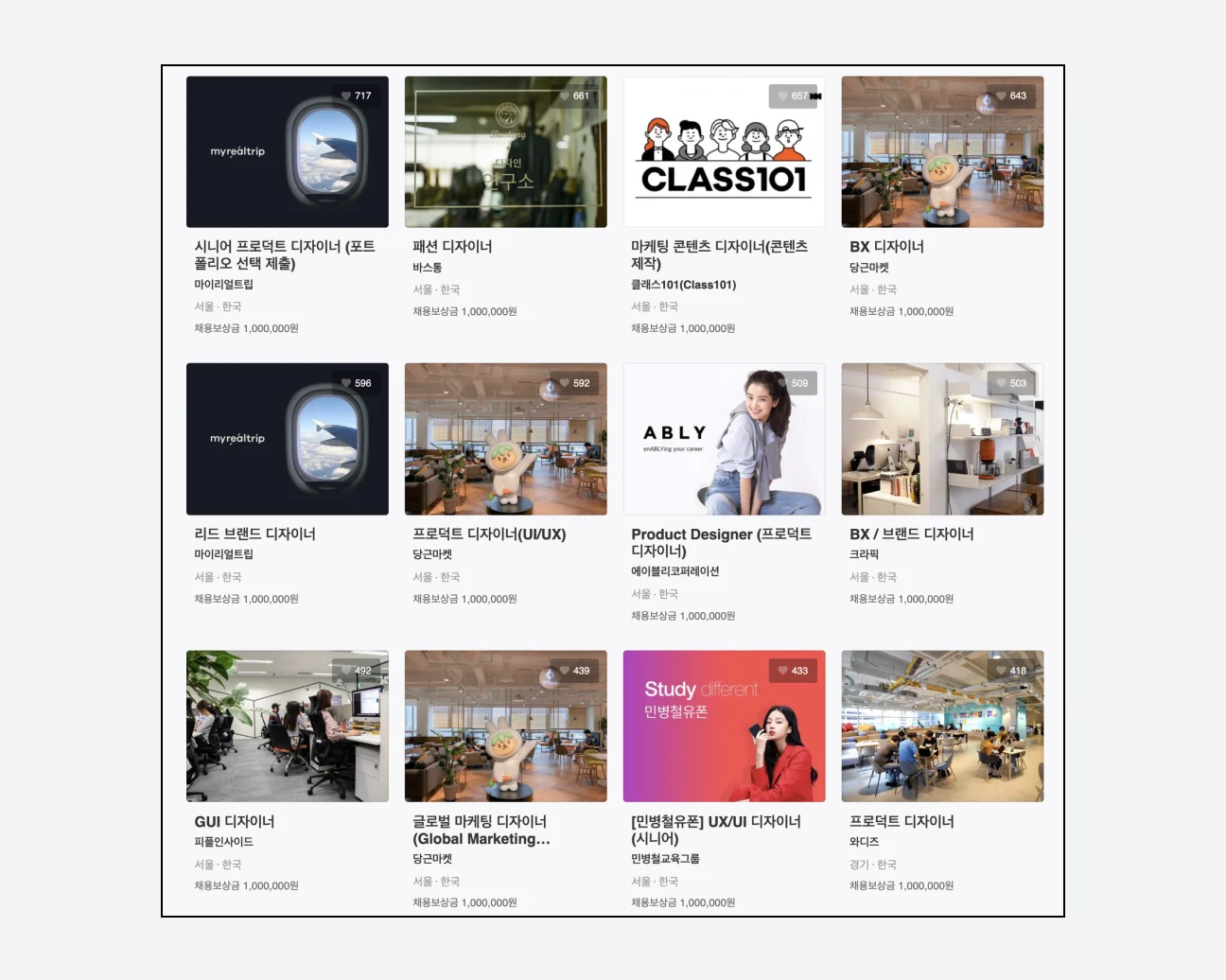
Check designer job postings