Background
I like learning things and then sharing them with others. I have worked as a designer in the tech industry for eight years, and along the way I realized that I enjoy sharing what others have taught me and that I am good at it. That led to welcome opportunities to teach practical design courses and write a book. Among them, the Design Systems Workshop is closely connected to my career, and I have been running it for quite some time.
I accepted the opportunity enthusiastically, but preparing and running the workshop proved more difficult than I expected. I kept studying and refining the way I taught, and the process began to feel like an interesting project in its own right. This article shares what I learned.
How it works
The Design Systems Workshop runs for eight weeks with 20 to 40 participants. I structure it around the following five mechanisms.
- Real-time participation (using Figma, Zoom, Discord, and Notion)
- Professional depth (a structured curriculum, my published material, and guest sessions with practitioners from other disciplines)
- Two-way participation (group activities and guided practice during class)
- Self-directed participation (improving projects through discussion and feedback within and across groups after class)
- Motivation (project assignments, final presentations, and LinkedIn recommendations for outstanding work)
- Real-time participation - live online classes
I did not think in-person classes would be sustainable alongside a full-time job. Even on the earliest days I finished work around 6 p.m., and traveling to a fixed venue would consume too much time. Participants faced the same constraint. I also did not want geography to limit who could join, and I wanted to keep weekends available for preparation and rest.
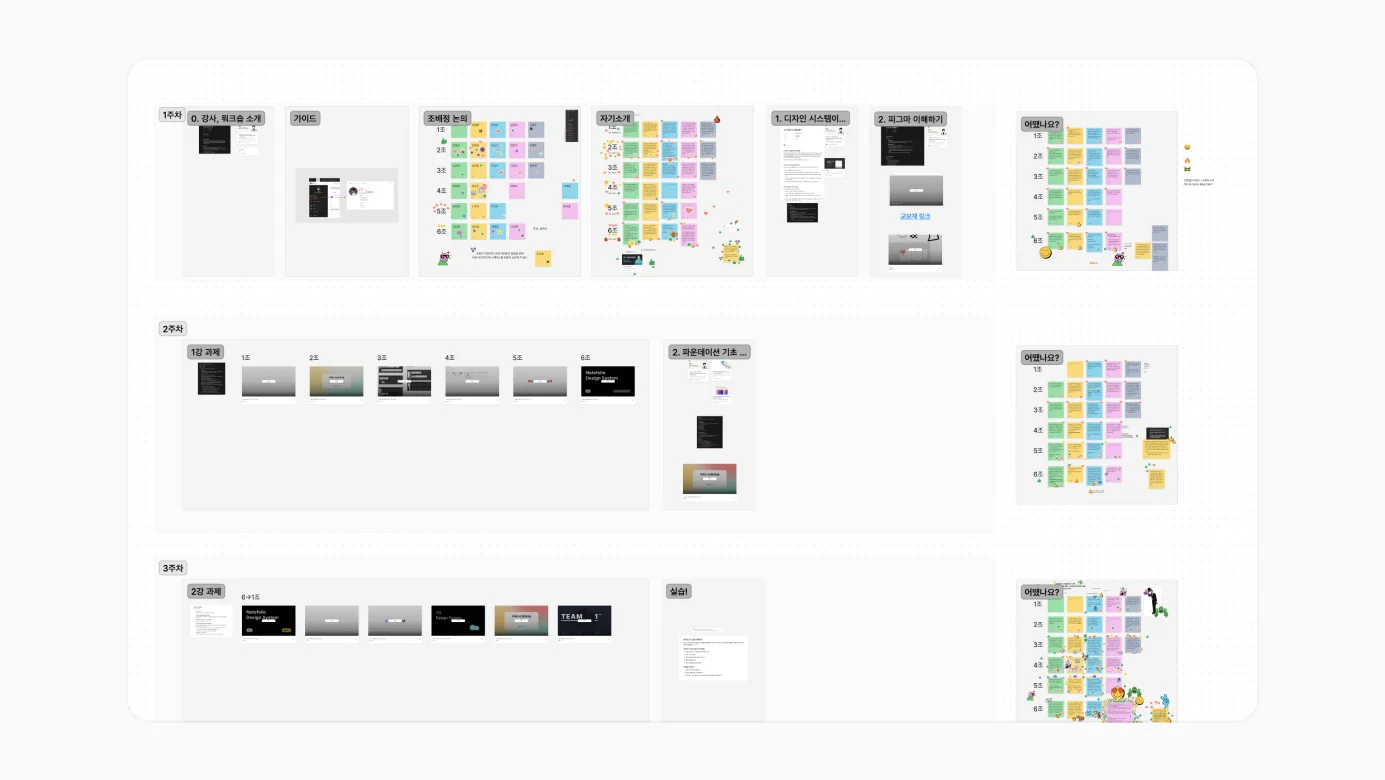
I actively used Figma and FigJam for real-time collaboration and assignments, Zoom for classes, and Discord for asynchronous conversation. One of the greatest strengths of in-person education is the atmosphere created when participants and an instructor can see one another and ask questions in real time. Live cursors, video sessions, and community chat helped recreate that experience online. I learned that the instructor's ability to respond to unexpected situations and questions matters enormously. There was plenty of trial and error, but I became more comfortable with each cohort.
- Professional depth - maintaining the quality of the course
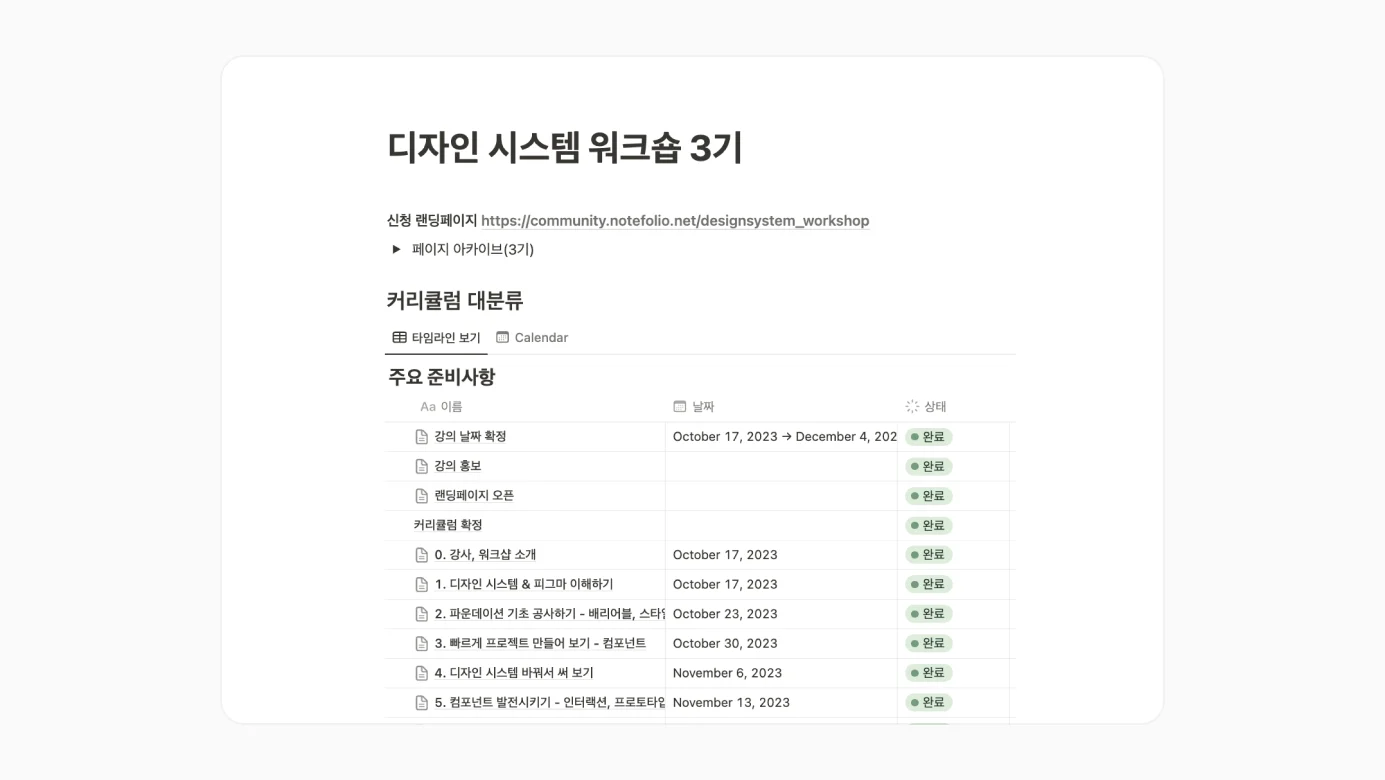
Participants take a course to improve their abilities in a particular field. No amount of facilitation can make up for a class that lacks expertise or practical value. I used the following structure to maintain professional depth.
- I select relevant material from the book I wrote and demonstrate how to build and manage a fictional system, from tool fundamentals to practical system methodology.
- To keep the course from becoming one-directional, I assign work almost every week and give close feedback in the following class. This takes a substantial share of our time, roughly 40 percent.
- I build hands-on practice into class. Participants work in assigned groups, open voice rooms in Discord to discuss their ideas, and collaborate in Figma. I move between those spaces to give tailored help. Rather than letting the instructor dominate the conversation, I make room for group members to discuss actively and build rapport with one another.
- I invite working UX writers and developers to lead sessions, giving participants perspectives from disciplines that are different from design but closely connected to design systems.
This structure lets me deliver essential material efficiently while reserving time for practice and assignment feedback. Participants learn by developing their own projects rather than simply listening.
- Two-way participation - making space for the instructor and participants to contribute together
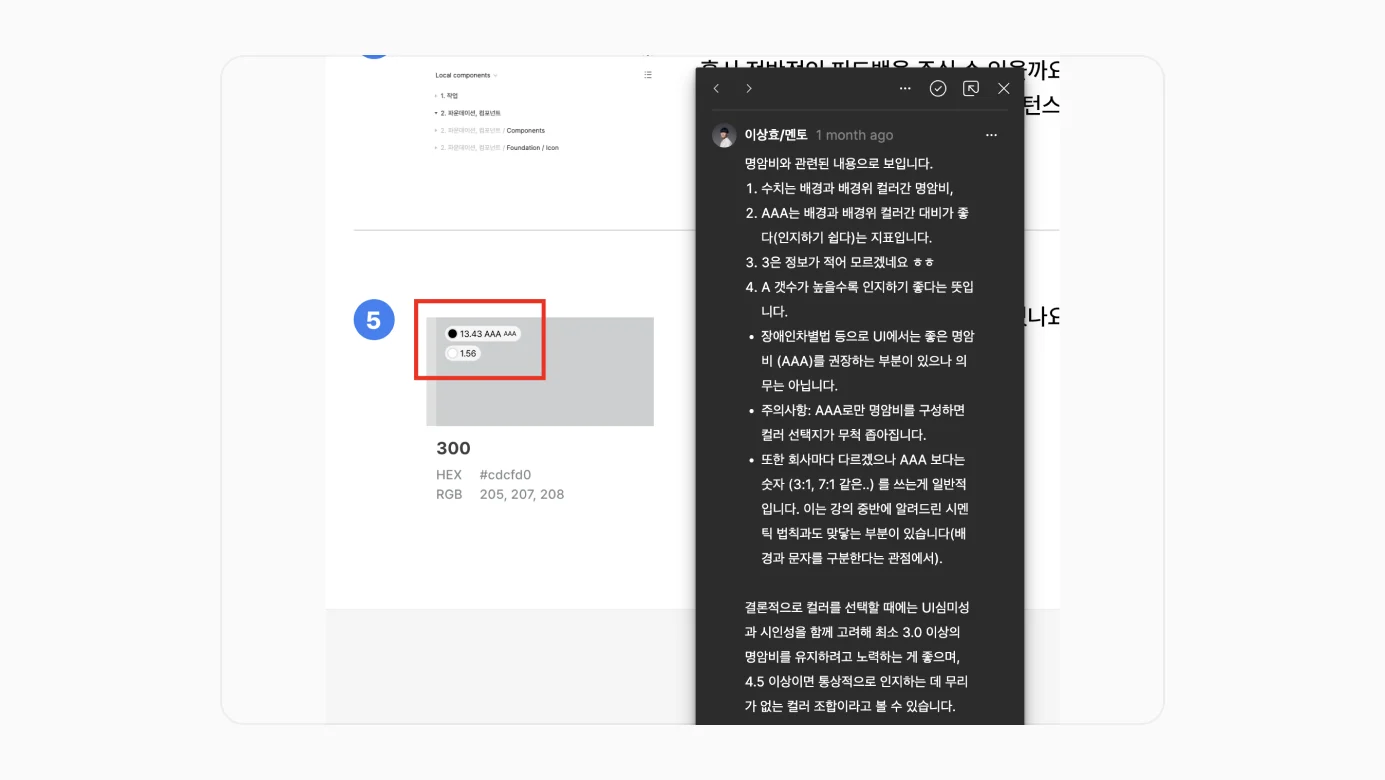
Many product designers, the workshop's main audience, work as the sole designer at a small startup. People who have not yet entered the field may have even fewer opportunities to collaborate.
The workshop is demanding and difficult to complete. Even when many people enroll, there is no way to know before the course begins how many will leave along the way. If too many people give up, it can undermine the motivation of those who remain.
I therefore reserve time for participants to practice directly and organize the work around group projects. When the course becomes difficult, group members can motivate one another and continue with persistence. I delegate authority over the assignment project to each group's lead, so I can review organized work and give focused feedback.

Five minutes before each class ends, everyone gathers in FigJam for a short “How was it?” check-in. Participants share brief reactions in real time, and I use the moment to build rapport. When useful suggestions about the course emerge, I consider and incorporate them.
- Self-directed participation - improving projects through peer discussion
Design systems are built for many people to use, so collaboration experience is essential. As a product grows, it becomes increasingly difficult for one person to create and decide everything about the system. Doing this well requires observing how other designers understand and use an early system, then learning from that evidence.
- During class, I give feedback on what each group should examine to make its system more coherent.
- I give the group lead, rather than the instructor, final decision-making authority over the project so the team can improve it independently.
- Around the middle to later part of the course, groups organize a first version of their projects, exchange them, try one another's systems, and give feedback.
This process encourages participants to discuss the project actively during and after class, helping one another improve and creating productive momentum.
- Motivation - what participants gain when the workshop ends
Because the workshop asks so much of participants, I wanted those who completed it well to feel a tangible sense of achievement and receive recognition for their work.
- I select an outstanding group and individual and write recommendations for them on LinkedIn. When an unusually large share of participants performs well, I also issue additional commendations. You can see all of these recommendations on my LinkedIn profile.
- I explain the recognition program and evaluation criteria from the beginning. The final assessment considers both the system produced over eight weeks and the clarity of the final presentation, giving participants a natural goal to prepare both the project and the story around it.
- Reaching that goal and producing a strong result requires serious discussion and agreement with many other designers and aspiring designers throughout the workshop. Working alone has clear limits. I believe this experience develops the communication skills that practical design work demands.
What worked well
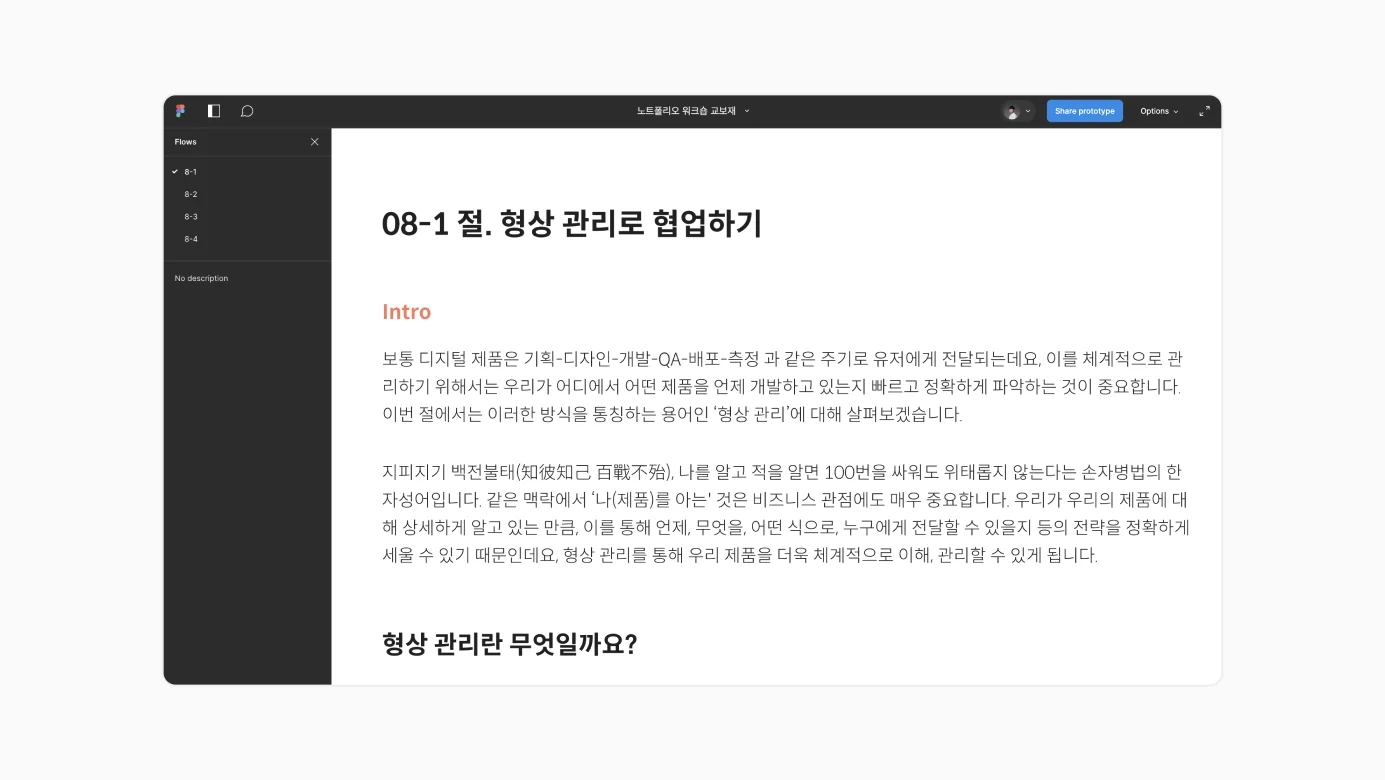
- Using the draft of my design book as course material created useful synergy. Because it was not the final publication PDF, it was easier to coordinate its use with the publisher, and it helped me run the course in a structured and efficient way.
- I do not believe design has one correct answer. The core of this workshop is not only my teaching and feedback but the experience of group members discussing alternatives, deciding what works better, and proposing their own approach. Across three cohorts, the course developed a careful structure for these small experiences of finding an answer together. I intend to keep this part whenever I teach another practice-based course.
- I was able to collaborate with capable people and delegate appropriately. Guest sessions with working UX writers and developers added perspectives I could not provide alone. By working with the designer platform Notefolio, I could delegate recruitment, promotion, and operations and focus on improving the quality of the course. I would also like to thank every participant who has taken on the role of group lead.
What could be improved
- Course level - It is always difficult to decide whose ability the course level should match. Once a cohort begins, participants range from design beginners to people above an intermediate level. I assess the group early and adjust the course toward the middle, but meeting every participant's needs remains difficult.
- Fairness - When reviewing assignments, some projects naturally invite more comments than others, regardless of their quality. As the instructor, I try to focus on lessons everyone can use, but feedback time can still vary between groups. I understand that a participant who prepared carefully may wonder why their work received less feedback. I try to balance the time thoughtfully, but this remains difficult.
- Benefits for group leads - During the workshop, I review every group's assignment almost every week, even if only briefly. Applying that feedback requires group members to meet and work together after class. The group lead must gather everyone's opinions and guide the system improvement project. Sometimes someone leaves, and the lead may have to prepare more than other members. The contribution can feel uneven, yet the role also offers the greatest opportunity to grow precisely because it is the hardest. As the instructor, I try to provide small benefits to group leads, such as final decision-making authority and priority when considering recommendations, but I still wonder whether there is a better structure.
Closing
This article records the structure and decisions I have developed while running the workshop. In business terms, this is not a highly scalable model. Compared with producing an on-demand course, live teaching requires close attention in real time while each run serves only a small number of participants. I continue to run the Design Systems Workshop because participants' growth is so visible, the process is rewarding for me, and it enriches my life. Thank you for reading this long reflection. I hope the way the course was designed and developed was interesting to you.
(Closed) Apply for the fourth Design Systems Workshop →
ⓒ 2024. SangHyo Yee, All Rights Reserved.