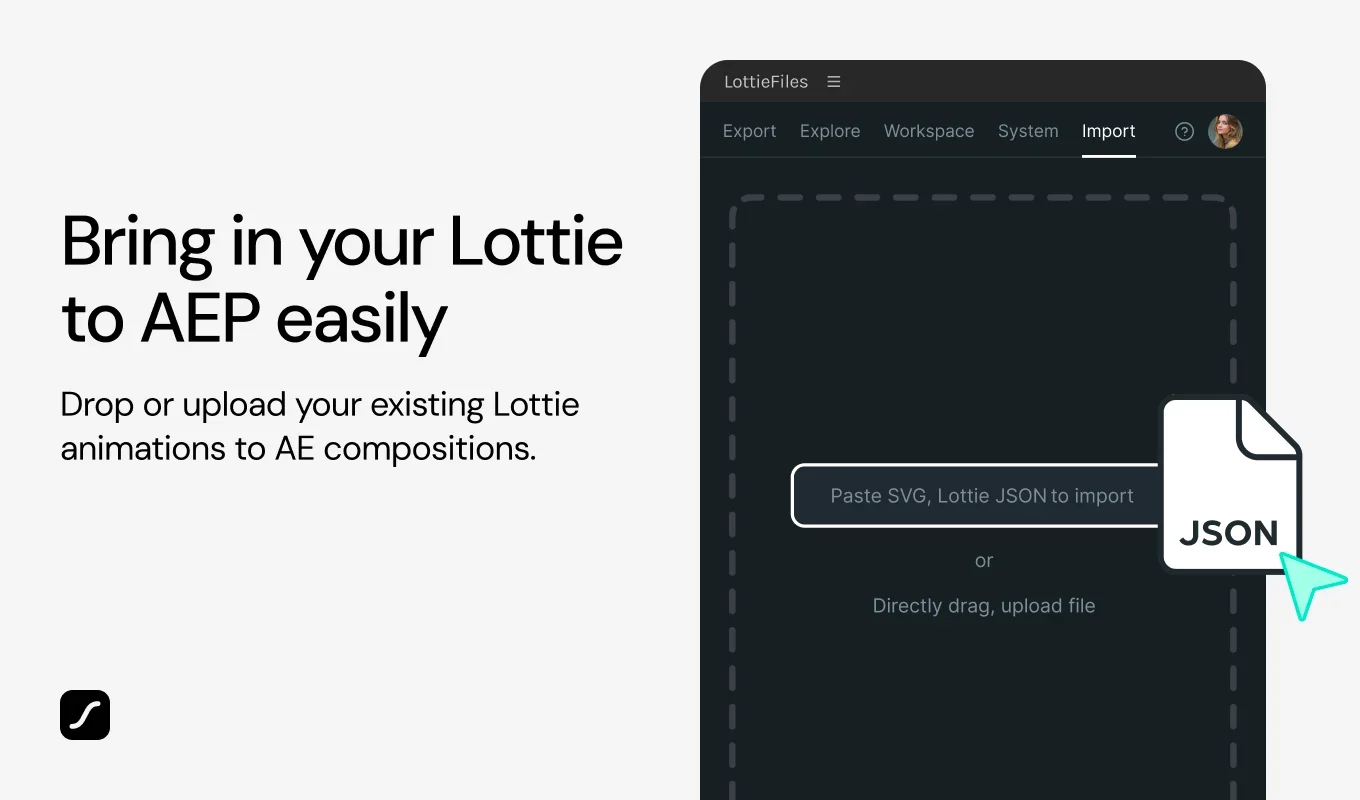
My first major project arrived with years of history
What looked like an interface redesign also replaced the rendering toolkit underneath a professional workflow.
When I joined LottieFiles in 2024, motion designers already depended on the After Effects plugin for real production work. Years of product decisions had accumulated. Important actions were difficult to scan, the relationship between rendering, saving, and downloading was unclear, and features that no longer matched the primary job remained in the panel.
A new foundation was necessary for more consistent rendering quality, but users did not care about the toolkit name. They cared whether the composition in front of them still worked. We needed to change the foundation while protecting the working habits of experienced creators.
Signals after launch
- about 10x · Post-launch render failure increase, later returned to normal
- about 13% · Users adopting Lottie import
I organized decisions before screens
The redesign followed the judgments a motion designer needed to make, not a list of available features.
After Effects users do not open the panel to learn a plugin. They want to know whether the composition will translate, protect visual quality and compatibility, manage file size, and move the result forward.
Before a render, the product helped people select and prepare the composition. During it, progress remained legible. After it, a creator could inspect the result and choose to save or download. Hiding every technical detail would make a misleadingly simple promise; exposing every implementation choice would return the burden to the user. Information appeared when it became useful, while preview and export stayed central.
Real rendering cases arrived after launch
Production files mixed layers, effects, masks, expressions, and working habits in combinations that tidy test files could not predict.
After 4.0 shipped, feedback, failure data, and negative rendering reviews rose over time. Some cases stopped the plugin, but successful exports that looked different from the source were even harder to discover.
There was no dedicated QA role, so designers and engineers tested builds directly. Manual checks could not reproduce every combination the previous renderer had supported or every file already in use. Rather than abandon the new foundation, we had to close the gaps revealed by real work one by one.
Customer files revealed what the metrics could not
A failure rate could not explain which workflow mattered or why, so we reviewed actual files and rendered results with key customers.
Very different problems lived inside the same metric. One effect could block export, another mismatch appeared only on a particular platform, and a small numerical difference could still destroy a visual treatment someone used repeatedly.
Cases from customer sessions became both clues for reproduction and evidence for support priorities. We considered frequency, visual impact, and whether a result could play consistently across platforms. As the new toolkit expanded support for effects including Gaussian Blur, I translated real working examples into product priorities, user expectations, and concrete outcomes to verify.