Over eight years, my involvement in design communities has taken me from a group chat to Doodoo, Figma Korea, and Friends of Figma Seoul. I first went looking for people I could learn from. Once I began organizing, the question changed: how could we make this something people would keep enjoying, together?
I needed a mentor, so I started a group chat
After university, I co-founded a company with colleagues and became its sole designer. Without a senior designer to learn from, I kept wondering whether I was doing things well and whether there was a better way. I wanted to talk to other working designers, but couldn't find the right place. So I started a group chat.
The people I met there gave me career advice and portfolio feedback. I learned things I hadn't been able to figure out on my own. That experience stayed with me, and after moving to my second company, I kept looking for other communities.
I had been using Adobe XD, but my new team used Figma. I joined Figma Korea on Facebook to learn the tool and see how other teams worked. As I shared examples I came across, I gradually became part of the organizing team.
From working alongside people to organizing with them
Around the same time, I joined Doodoo, short for "Do What You Want To Do," a monthly hackathon community. We'd meet on a Friday at the end of the month, each choose something to work on, and keep going through the night. It suited me: finding time for side projects alongside a full-time job wasn't easy.
I shared my side projects and the ways I worked with XD and Figma. People responded warmly, and I joined the organizers. For several years, I helped run both Doodoo and the Figma community alongside other volunteers.
The pandemic was a turning point. As meeting in person became impossible, some gatherings moved online and others slowed down. I took over from the previous leader of the Figma community, and we later continued as part of the official Friends of Figma program.
I began to realize that the organizers' desire to keep going mattered just as much as the audience's interest. Everyone was volunteering outside their day jobs. Even a well-planned event wasn't sustainable if the people making it happen no longer enjoyed it.
The organizers needed something to take away, too
When we needed new organizers, I approached people who were already contributing to the Figma community. Some had spoken at Config, written books, taught classes, or built an audience on Instagram. I thought recognition as an official community leader could support what they were already doing.
I also kept the commitment manageable. Rather than asking people to meet constantly, I suggested planning and running an event together roughly once a quarter. Everyone had work of their own, and I didn't want to start by asking for more time than they could comfortably give.
Once we were working together, I made a point of recognizing their contributions. At the start of events, I introduced the people who had played key roles in preparing them. For larger gatherings, I invited other leaders to give the opening remarks I usually handled. I also took part in their work outside the community where I could be helpful.
We chose topics people in the industry were curious about at the time: new Figma features, design systems, or how design teams collaborated inside companies. I wanted attendees to learn something, but I also wanted organizers to meet people they were interested in and share experiences that mattered to them.
When I first invited them, I didn't know we'd be doing this together for so long. After years of meetups and trips to San Francisco, the people I'd met to organize events had become much closer friends than I expected.
An event at Seoul National University, made possible together
Friends and Figma in Seoul was a good example of how we worked. One leader's connection with Seoul National University opened the conversation, and we went on to host an event in a large lecture space, with Figma employees among the speakers.
Once the partnership was agreed, I took on detailed planning, attendee recruitment, and operational preparation. On the day, I led on-site operations to keep the sessions running smoothly.
The leader who introduced us to the university continued handling the venue arrangements. Other leaders brought in external speakers and recruited volunteers. The university did more than provide a room: it helped with preparation and on-site operations as a co-host.
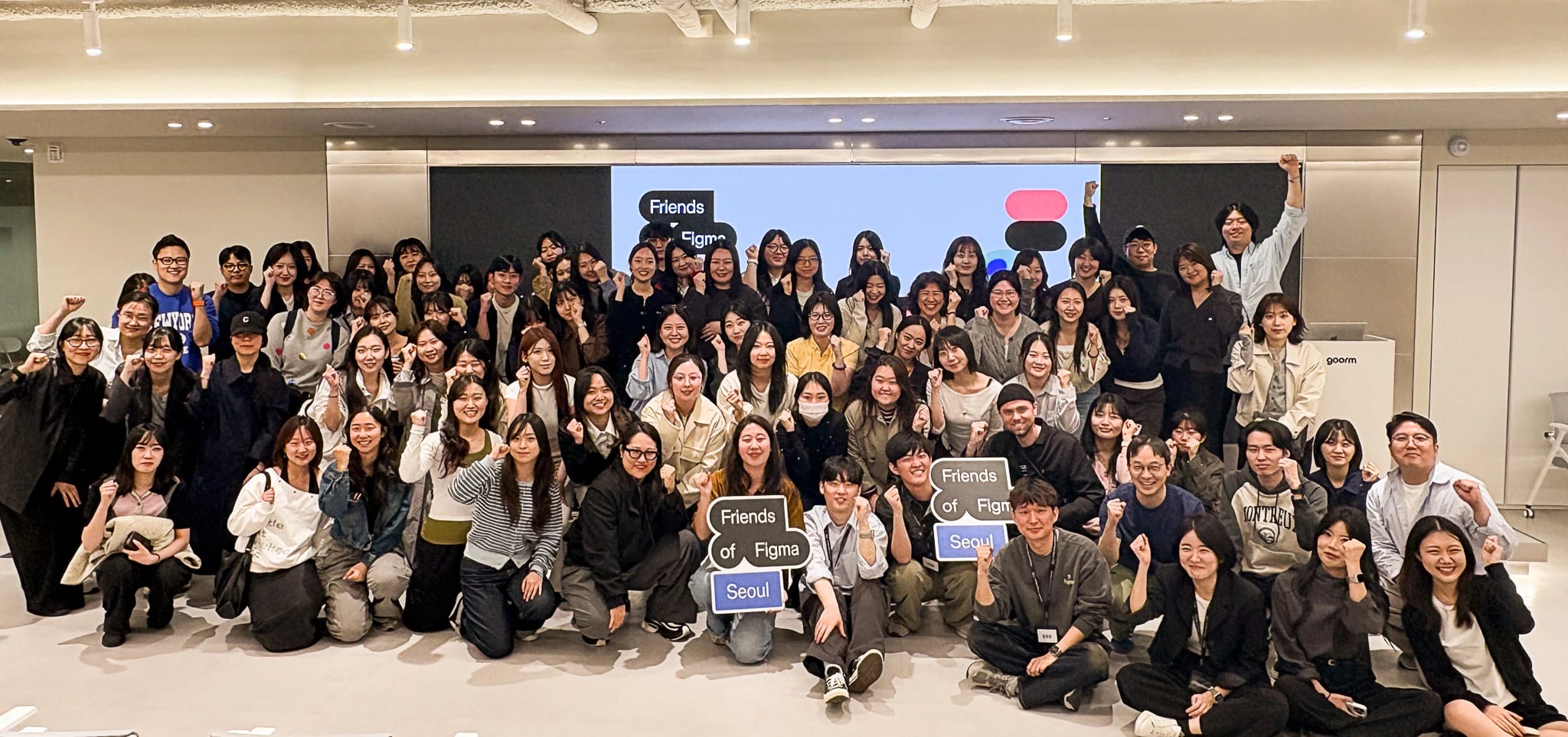
Another memorable event was the Config 2025 recap meetup we held with SIDIZ. Both events filled quickly. Their size meant we needed help beyond our four leaders, and a number of volunteers joined us.
I couldn't have done all of it myself. These events happened because people brought their own connections and experience. Watching them give their time to share something they cared about made me want to keep organizing the next one.